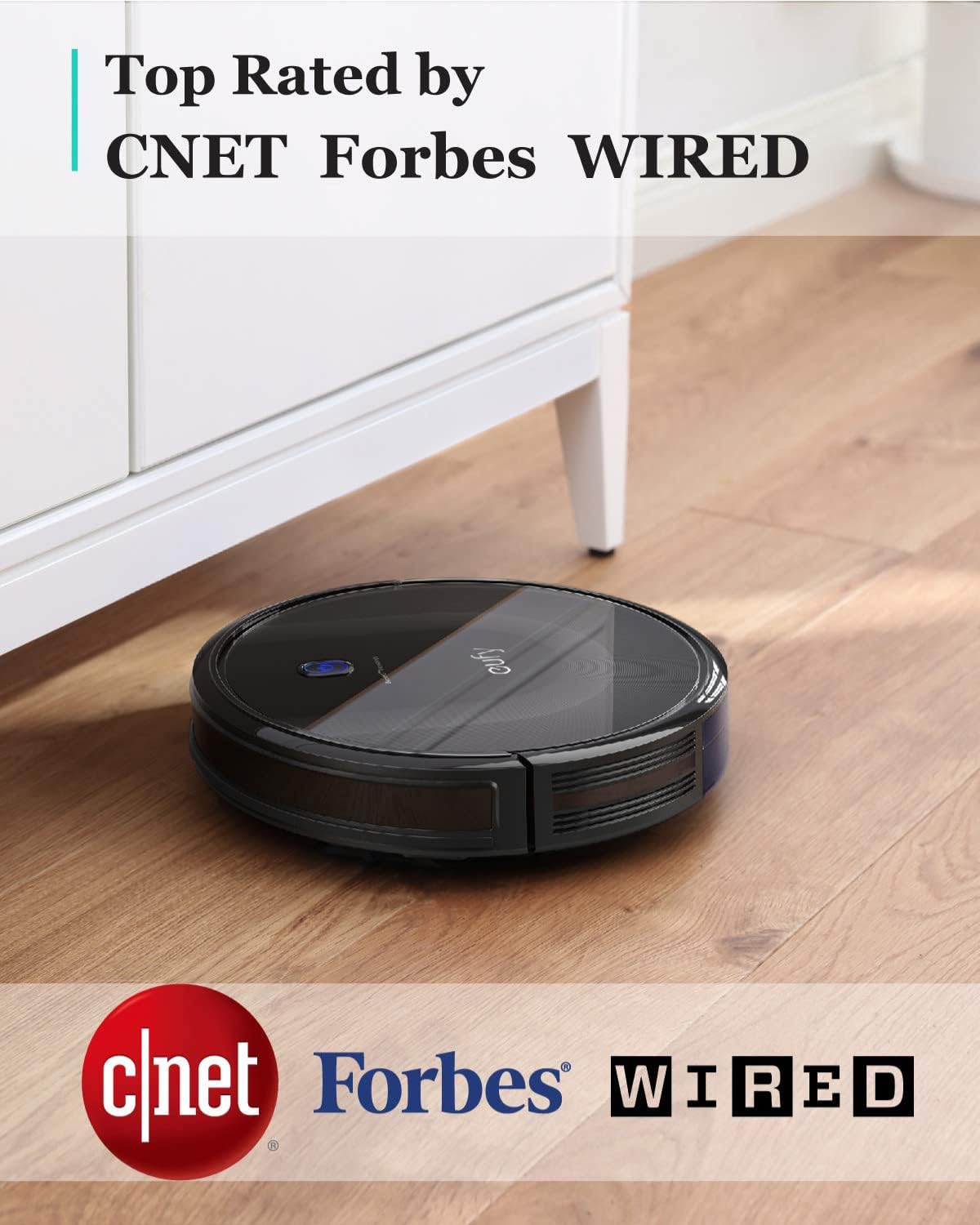
A robot vacuum is exactly what it sounds like — a small, self-propelled disc that rolls around your floor vacuuming while you ignore it. The part people underestimate is how it decides where to go. Two completely different navigation philosophies dominate the under-$150 market right now. LiDAR navigation (Light Detection And Ranging) means the robot spins a laser on its head, bounces pulses off your walls and furniture, and builds an actual floor map — the same basic principle self-driving cars use, just smaller and cheaper. Bump navigation (also called reactive or random navigation) means the robot wanders in a pattern, detects when it hits something, and redirects — no map, no memory, just physics and probability. That one design choice ripples through everything: how long a cleaning run takes, how reliably it finds your corners, and whether you’ll be annoyed enough to return it by week two. If you’re deciding between a handful of models right now, this breakdown is for you.
| EDITOR'S PICK[eufy Robot Vacuum 11S MAX](https://www.amazon.com/dp/B07R295MLS?tag=greenflower20-20) | Mid-tier[Lefant Robot Vacuum Cleaner](https://www.amazon.com/dp/B08R9LK9K3?tag=greenflower20-20) | Budget pick[ILIFE V2 Robot Vacuum Cleaner](https://www.amazon.com/dp/B0F4DKGRDN?tag=greenflower20-20) | |
|---|---|---|---|
| Runtime | — | 120 Mins | 120 Mins |
| Control | — | Wi-Fi/App/Alexa | — |
| Pet Hair | — | Ideal | Ideal |
| Floor Type | Hard to Medium-Pile | Hard Floor | Hard Floors |
| Price | $159.99 | $149.99 | $79.99 |
| See on Amazon → | See on Amazon → | See on Amazon → |
What Navigation Difference Actually Costs You Day-to-Day
Let’s be direct about the tradeoff, because marketing copy almost never is.
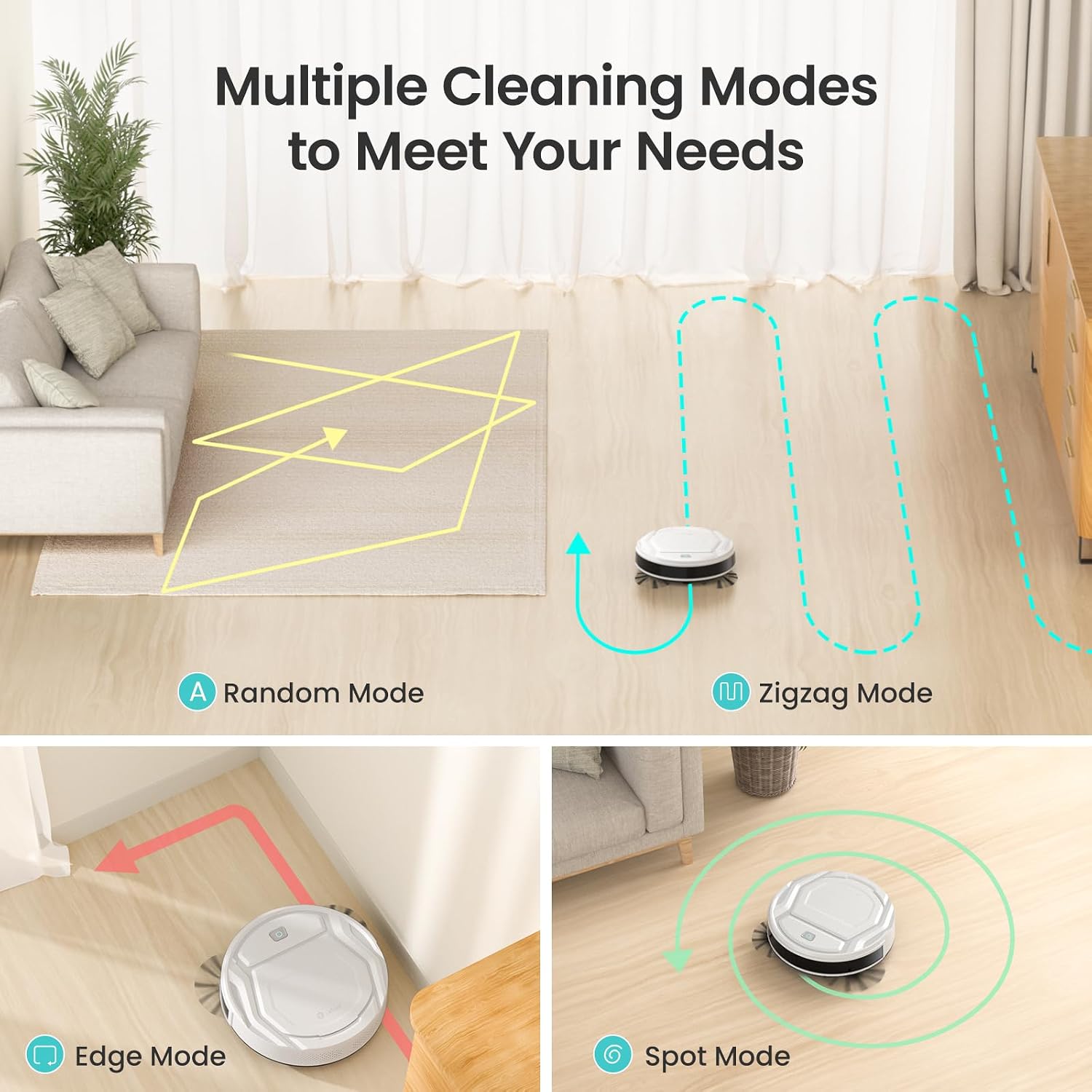
A bump-navigation unit in a multi-room home will cover the space eventually — but “eventually” means 60–90 minutes of overlapping, redundant passes on the same high-traffic zones while corners and under-sofa edges get visited by chance. IEEE Spectrum, in its coverage of home robot navigation systems, describes this as the “coverage probability problem”: without a map, the bot can’t distinguish already-cleaned zones from uncleaned ones, so statistical coverage replaces deliberate routing. Owners of bump-nav units across aggregated review pools consistently describe the same experience: the center of the living room gets three passes; the bedroom corner gets one on a good day.
LiDAR units in this price bracket solve that specific problem. They’re not perfect — the ILIFE A30s, for instance, ships with a LiDAR module and full room-mapping that owners in long-run reviews call genuinely accurate for the price, flagging it as the standout feature at this tier. The Tikom G8000 Max similarly draws praise for its under-furniture reach once it has laid down an initial map. The tradeoff you accept with budget LiDAR is firmware instability and occasionally flaky app connectivity — not the navigation itself, but the software wrapper around it.
The honest summary: If your home is one open room, bump navigation is perfectly serviceable. If you have doorways, furniture clusters, or multiple rooms, a budget LiDAR unit earns back its price premium in time and sanity within a month.
Model-by-Model Breakdown: Where the Real Surprises Are
Lefant M210 — Bump Navigation, Surprisingly Capable on Fine Debris
The Lefant M210 runs bump navigation paired with what Lefant calls a “freemove” sensor array — multiple infrared sensors that create a slightly more deliberate bounce pattern than pure random-walk designs. Owners consistently report it as a revelation for fine dust and dog hair pickup on hard floors, specifically noting that it finds debris on surfaces that looked already clean. That’s a suction-efficiency story more than a navigation story: reviewers credit the compact, brushless suction inlet design for pulling in particles that roller-brush models fling sideways.
What you give up: no map means no room segmentation, no cleaning history, and no targeted room cleaning. On a 1,400 sq ft multi-room floor plan, expect longer runtimes and missed zones near walls and corners.
ILIFE
$79.99
In stock on Amazon
Check price on AmazonILIFE V2 — Roller-Free Suction Head, Long Hair Performance
The ILIFE V2 runs a roller-free suction design — no spinning brush bar, just a wide suction mouth. The intuition for most buyers is that this reduces performance. The reality, per owners in long-run reviews, is the opposite for long hair: without a brush roller to tangle around, hair goes straight into the bin instead of wrapping around an axle and slowly strangling the motor. Multiple reviewers specifically flag this as the reason they kept the V2 after expecting to return it.
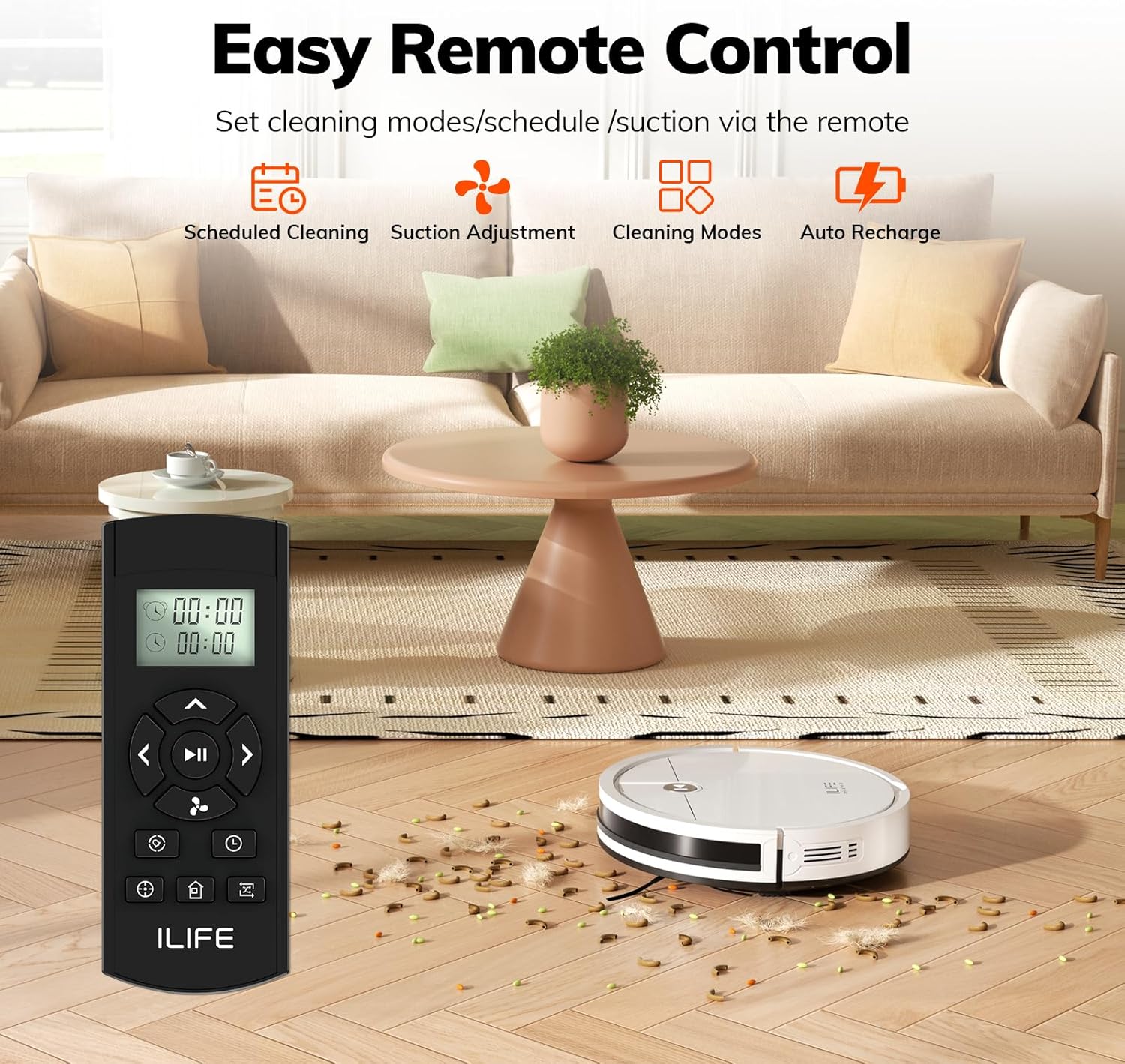
Navigation is basic bump-and-redirect. ILIFE’s implementation is older-generation; don’t expect the sensor density of the Lefant. For a studio apartment or a single large room with minimal furniture obstacles, it earns its keep. For anything more complex, the coverage gaps accumulate. The ILIFE V2 also ships with a physical remote and requires no app to operate — a meaningful advantage for buyers who want zero smartphone overhead.
ILIFE
$79.99
In stock on Amazon
Check price on AmazonTikom G8000 Max — 5000Pa Suction, LiDAR Mapping, Strong Under-Furniture Reach
The Tikom G8000 Max is the performance outlier in this price band. Spec sheets rate it at 5000Pa suction — more than double what most competitors in this tier claim. Owners highlight two things: the under-furniture reach (a function of its low-profile chassis plus suction power) and the LiDAR-guided systematic cleaning pattern that avoids wasted passes.
The Wirecutter, in its annual robot vacuum guide published by The New York Times, notes in its methodology section that raw Pa numbers are measured under constrained airflow conditions and don’t translate directly to real-floor performance. That said, owner feedback across aggregated reviews aligns with the spec — the G8000 Max demonstrably pulls debris off low-pile carpet that lower-suction units leave behind.
One consistent owner complaint: the app runs on 2.4GHz Wi-Fi only. If your router defaults to a 5GHz band, setup requires a trip into router settings. Not a dealbreaker, but it catches first-timers off guard.
Lefant
$149.99
In stock on Amazon
Check price on Amazoneufy 11S MAX — Review Pool Caution Required
Here’s a genuine editorial note: if you’re evaluating the eufy 11S MAX based on its retail review aggregate, know that TechCrunch, in its 2024 piece on budget robot vacuums (“Budget Robot Vacuums Are Getting Surprisingly Good”), noted the pattern where eufy product pages aggregate reviews across multiple model variants. The 11S MAX listing pulls in ratings from earlier 11S models and adjacent eufy units, which makes the overall sentiment pool unreliable for model-specific decision-making. Owners who specifically distinguish the MAX variant in their text reviews call out its slim 2.85-inch profile as the real selling point — it clears furniture that standard-height robots can’t reach.
Navigation is bump-pattern. Suction is rated at 2000Pa, which is adequate for hard floors and light carpet. The eufy 11S MAX is a sound pick for buyers who prioritize low-profile clearance and a clean, simple interface over mapping sophistication.
ILIFE
$79.99
In stock on Amazon
Check price on AmazonILIFE A30s — LiDAR Mapping and Dust Bin Size as Standouts
The ILIFE A30s is the strongest all-rounder argument in this price tier for homes over 800 square feet. Owners in long-run reviews specifically call out two features: the LiDAR mapping accuracy and the larger-than-average dust bin. That bin size matters more than it sounds — without a self-empty dock (none of these models have one), you’re manually emptying after every run. A bigger bin means fewer mid-run interruptions on larger floor plans.
The A30s maps on first run, and owners report that initial mapping on a 1,400 sq ft floor plan typically takes 45–70 minutes, after which subsequent cleaning runs are faster and more deliberate. The app is functional but basic — scheduling and room segmentation work, live map editing is limited. Wired, in its 2025 robot vacuum roundup (“The Best Robot Vacuums We’d Actually Buy”), identifies LiDAR-equipped models at this price point as the strongest value jump over bump-nav alternatives for multi-room homes, a conclusion the A30s owner experience broadly supports.
Lefant
$149.99
In stock on Amazon
Check price on AmazonBy the Numbers
| Model | Navigation | Rated Suction | Roller Brush | App Required | Tier |
|---|---|---|---|---|---|
| Lefant M210 | Bump (multi-sensor) | ~2000Pa | No | Optional | ILIFE — $79.99 |
| ILIFE V2 | Bump (basic) | ~1600Pa | No | No | ILIFE — $79.99 |
| Tikom G8000 Max | LiDAR | 5000Pa | Yes | Yes (2.4GHz) | Lefant — $149.99 |
| eufy 11S MAX | Bump | 2000Pa | Yes | Optional | ILIFE — $79.99 |
| ILIFE A30s | LiDAR | ~2000Pa | Yes | Yes | Lefant — $149.99 |
Suction ratings from manufacturer spec sheets. Real-floor performance varies by surface type and debris load.
The Maintenance Reality Nobody Mentions at Purchase
None of these models include a self-empty dock. That’s not unusual at this price tier, but it has a weekly maintenance consequence worth stating plainly: you will empty the dust bin manually after every run, or every other run if you push it. For a 1,400 sq ft home with pets, that’s a 2–3 minute task every 1–2 days.
Weekly maintenance across all five models looks roughly like: empty the bin, clean the filter (tap it out or rinse if it’s washable), check the brush roll or suction inlet for hair wrap, and wipe the sensors with a dry cloth. Wired’s robot vacuum coverage specifically notes that skipping sensor cleaning is the most common reason budget robots start navigating erratically after a few months — the IR sensors that detect drop-offs and obstacles accumulate dust film over time. That five-second wipe-down every week extends the functional life of these units considerably.
Frequently Asked Questions
Does a robot vacuum without a roller brush actually pick up pet hair effectively? It depends on hair length. Roller-free designs like the ILIFE V2 and Lefant M210 handle long hair better than expected because there’s nothing to tangle around — hair enters the bin directly. Short pet hair on carpet is a different story; brush-roll models generally agitate and lift it more reliably. Owners with long-haired dogs or cats on mostly hard floors report the roller-free design as a genuine advantage.
Will a bump-navigation vacuum miss spots in a multi-room home? Yes, consistently and predictably. IEEE Spectrum’s reporting on robot navigation coverage explains why statistically: without a map, random-walk navigation achieves roughly 85–90% of a room’s area in a single run under ideal conditions, and multi-room homes with doorways dramatically worsen that percentage. Budget for occasional supplemental sweeping in corners and transition zones.
Do any of these models work without a smartphone app? Yes. The ILIFE V2 includes a physical remote control and can be operated entirely without an app. The eufy 11S MAX and Lefant M210 both have limited app-free functionality via onboard controls. The Tikom G8000 Max and ILIFE A30s are app-dependent for full functionality, though they’ll still run a basic cleaning cycle with a button press.
How long does first-run mapping take on a 1,400 sq ft home? For LiDAR models: owners consistently report 45–75 minutes for a 1,400 sq ft layout on first run, after which the map is saved and subsequent runs are faster. Bump-nav models don’t map — they just run until battery depletes or the timer ends.
Is 5000Pa suction meaningfully better than 2000Pa for carpet? On low-pile carpet, yes — owners of the Tikom G8000 Max report noticeably better debris pickup versus 2000Pa alternatives. On deep-pile or plush carpet, no budget robot vacuum in this tier performs reliably regardless of Pa rating; the wheel torque and chassis design aren’t built for it. The Wirecutter notes in its robot vacuum methodology that suction spec comparisons are most meaningful when comparing models on identical surface types under controlled conditions.
What weekly maintenance is required if there’s no self-empty dock? Plan for: emptying the dustbin after each run (2 minutes), cleaning or tapping out the filter once a week, checking for hair tangles in the brush roll or suction inlet, and wiping the cliff and obstacle sensors with a dry cloth. Total time: 5–10 minutes per week for a typical household. Skipping filter maintenance is the fastest route to suction loss.
The Decision Rule
If your home is a single open space under 600 sq ft with mostly hard floors: the Lefant M210 or eufy 11S MAX gets the job done without the app overhead. If you have long-haired pets on hard floors: the ILIFE V2’s roller-free design is worth a close look. If your home is 800+ sq ft with multiple rooms: don’t buy a bump-nav unit expecting full coverage — the ILIFE A30s or Tikom G8000 Max is where your money should go. And before you finalize any eufy purchase based on aggregate review scores, read the text reviews and confirm they’re specific to the MAX variant. That due diligence takes five minutes and will save you a return.