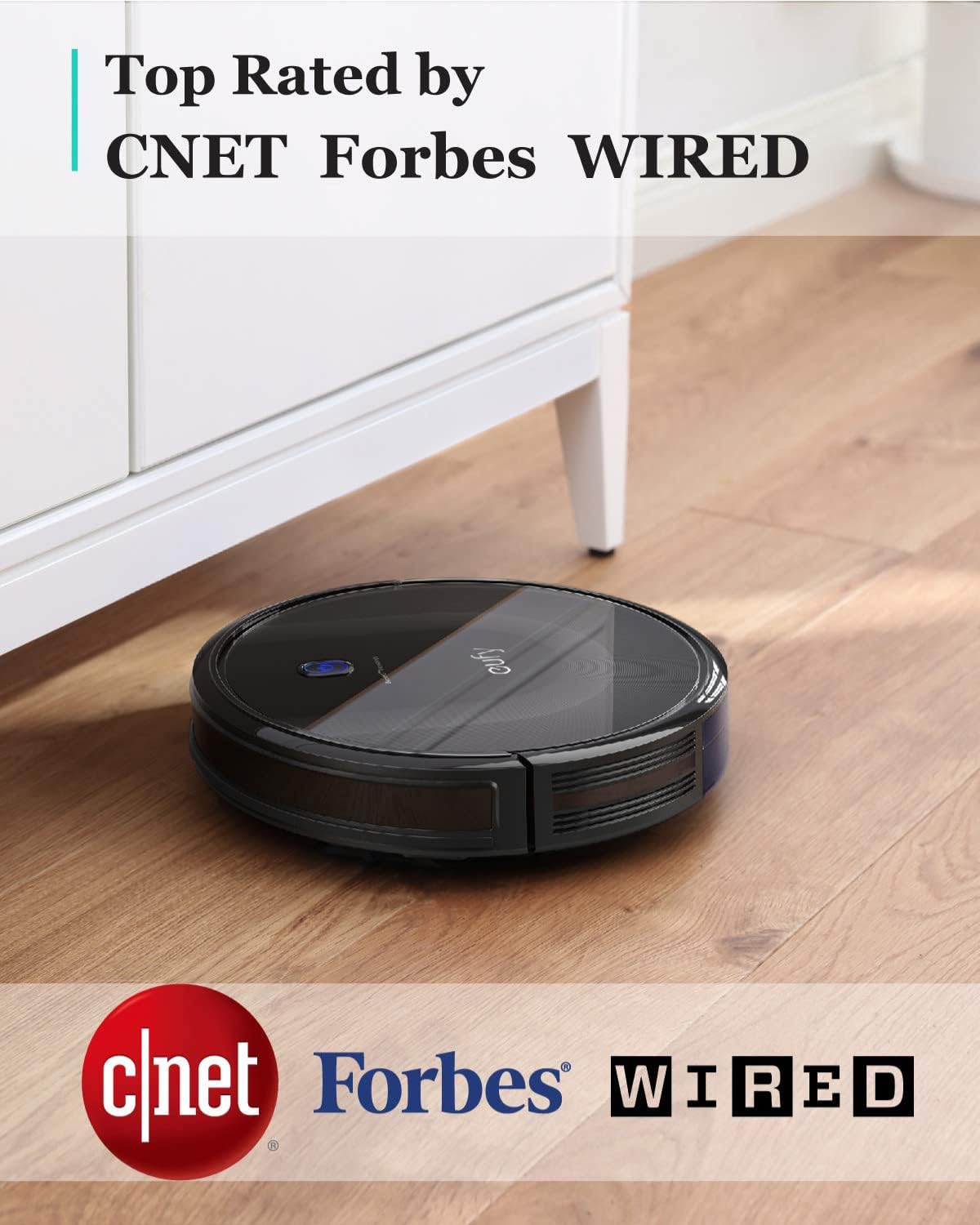
A robot vacuum is exactly what the name says: a self-propelled disc-shaped machine that roams your floors, sucks up dirt, and (mostly) stays out of your way. The appeal at the under-$100 tier is obvious — you get daily floor maintenance on autopilot without spending what a mid-range corded vacuum costs. The tradeoff is equally obvious once you know what to look for: at this price point, you’re almost always giving up smart mapping (the ability to build a floor plan and clean in orderly rows) in exchange for bump-and-go navigation, where the robot bounces off walls and furniture like a billiard ball until time runs out. Whether that matters depends entirely on your floors, your lifestyle, and how much you care about the corners. This article walks through four real-world contenders — eufy 11S MAX, Lefant M210, ILIFE V2, and ILIFE A30s — with honest tradeoffs, the math on hidden labor costs, and a plain-English decision rule at the end.
What You’re Actually Buying at This Price Point
Let’s be direct: under $100, you are buying a supplement, not a replacement, for your regular vacuum. That framing changes how you evaluate the field entirely.
The NYT Wirecutter’s regularly updated guide, “The Best Robot Vacuums” (thewirecutter.com), draws a clear line between budget units and mid-range performers, noting that bump-and-go robots cover floors adequately for light daily maintenance but struggle with systematic edge-to-edge coverage. Wired’s 2025 roundup, “The Best Robot Vacuums We’ve Reviewed” (wired.com), echoes this: the value case for sub-$100 models is daily touch-up between weekly deep cleans — not replacing those deep cleans.
With that context set, here’s the four-model snapshot:
By the numbers
| Model | Navigation | Bin Size | Height | Roller Brush |
|---|---|---|---|---|
| eufy 11S MAX | Bump-and-go | ~600 ml | 2.85 in | Yes |
| Lefant M210 | Bump-and-go | ~600 ml | 2.72 in | No (suction-only) |
| ILIFE V2 | Bump-and-go | ~300 ml | 2.8 in | No (suction-only) |
| ILIFE A30s | LiDAR mapping | ~800 ml | 3.54 in | Yes |
The ILIFE A30s is the anomaly in this group. LiDAR mapping — using a spinning laser sensor to build a room diagram and clean in systematic rows — usually lives at the $200–$400 tier. Finding it sub-$100 during sale periods is a genuine outlier, but it comes with a height penalty we’ll get into.
The Four Contenders, Honestly Assessed
eufy 11S MAX — The Thin, Quiet Daily Driver
The 11S MAX’s defining spec is its 2.85-inch height, which lets it slip under furniture that stops most competitors cold. Owners consistently praise this in aggregated reviews: furniture gaps that block other robots are a non-issue here.
It’s also notably quiet at its lower suction setting — owners report it running during work-from-home hours without interrupting calls, which is a genuine quality-of-life win that rarely appears in marketing copy.
The honest downside: it uses bump-and-go navigation, and that shows. Multiple owner reviews flag that it misses the same spots repeatedly — corners, narrow galley sections — because the random-bounce pattern never guarantees coverage. The NYT Wirecutter’s assessment of bump-and-go units broadly supports this finding: coverage rates lag systematic cleaners by a meaningful margin on complex floor plans, a point made explicitly in their “The Best Robot Vacuums” guide (thewirecutter.com).
Best for: Apartments, open-plan floors with minimal furniture clutter, anyone who needs low-clearance capability.
ILIFE
$79.99
In stock on Amazon
Check price on AmazonLefant M210 — The Pet Hair Workhorse
The Lefant M210 flies under the radar, but owner satisfaction signals here are unusually strong. Multiple verified owners in aggregated review sets report being genuinely surprised by how much fine dust and pet hair the unit collects — floors that looked clean yielded full bins. Even more telling: multiple owners report purchasing a second unit for a different floor, which is the kind of repeat-purchase behavior that reveals real-world satisfaction better than star ratings do.
The M210 uses a suction-only design (no roller brush), which deserves more attention than it typically gets. Roller brushes are the primary tangle point for long hair and carpet fiber — the hair wraps around the brush, reduces suction, and eventually requires manual cleaning that takes 5–10 minutes per session. The M210 sidesteps this entirely. TechCrunch’s 2024 budget vacuum roundup (techcrunch.com) identifies suction-only designs as a meaningful maintenance advantage in pet-hair households, noting that brush-tangle time is a chronic underestimated ownership cost.
The tradeoff: suction-only units are less aggressive on embedded carpet dirt than brush-equipped models. For mostly-hard-floor homes this is irrelevant. For homes with heavy area rug use, it matters.
Best for: Pet owners (especially long-haired breeds), hard-floor-dominant homes, anyone who has spent too much time de-tangling a roller brush at 10pm.
ILIFE
$79.99
In stock on Amazon
Check price on AmazonILIFE V2 — The Minimalist and the Off-Grid Proof
The ILIFE V2 earns a specific mention because it survives conditions that stress most sub-$100 units. One frequently cited owner account describes using it off-grid in a desert environment — sand, grit, and fine particulate are daily inputs — and the unit reliably finding its dock and completing cycles. That is meaningful durability data in an environment that clogs conventional robots quickly.
Like the M210, the V2 runs without a roller brush, and owners consistently flag this as a feature rather than a limitation: no tangles, less maintenance, and a bin you can empty quickly without digging out hair knots.
The bin size is the main limitation at approximately 300 ml — roughly half the capacity of the A30s. In a high-debris environment or a multi-pet household, you may be emptying it twice a day rather than once. That labor cost adds up, and we quantify it in the section below.
Best for: Homes with hard floors and unusually fine debris (construction dust, sand, craft rooms), pet owners who prioritize zero-maintenance roller brushes over bin capacity.
ILIFE
$79.99
In stock on Amazon
Check price on AmazonILIFE A30s — The LiDAR Outlier With a Clearance Problem
If you can find the A30s at or under $100, it represents a genuinely different category of machine. LiDAR mapping means it builds a room diagram, cleans in systematic rows, and does not re-clean areas it has already covered. Owners report accurate mapping and a large-capacity bin (~800 ml) that extends between-empty intervals meaningfully compared to the other three models.
Here is the real-world catch: the A30s stands 3.54 inches tall. One owner review explicitly notes that it cannot fit under a standard coffee table — a piece of furniture that nearly every other unit in this roundup clears. If your home has low-clearance furniture you want cleaned under, the A30s will map around it rather than under it. Systematically cleaning what it can reach is better than random coverage, but “better coverage of accessible areas” is a different value proposition than “cleans everywhere.”
Robotics and Automation News, in their “Consumer Robotics Market Outlook 2025” report (roboticsandautomationnews.com), notes that LiDAR-equipped units are gradually filtering into lower price tiers, but that cost pressure at this level typically shows up in sensor quality and firmware support longevity — worth monitoring for this model specifically.
Best for: Open-plan floors with little low furniture, anyone for whom systematic row-by-row coverage matters more than getting into tight clearance spaces.
ILIFE
$79.99
In stock on Amazon
Check price on AmazonThe Hidden Labor Cost Nobody Mentions
Here is the math that most buyer guides skip entirely.
None of these four models includes a self-emptying base. A self-emptying dock collects debris from the robot’s bin automatically, typically holding 30–60 days of material before you need to touch it. Every unit in this roundup requires manual daily bin emptying — and at the smaller bin sizes common at this tier, in a two-pet household, that may mean twice daily.
Estimate 2 minutes per empty. Over a year, at once daily: roughly 12 hours of manual maintenance labor. At twice daily: closer to 24 hours. This is the true hidden cost of the sub-$100 tier, and it is worth naming before you buy.
Wired’s robot vacuum coverage (wired.com, “The Best Robot Vacuums We’ve Reviewed,” 2025) consistently identifies manual bin emptying as the primary underestimated ownership friction at the budget tier — a friction point that self-emptying docks at higher price levels solve almost entirely.
If you have two actively shedding dogs, the Lefant M210’s higher owner satisfaction rate combined with its no-tangle suction design probably reduces total maintenance time compared to a brush-equipped unit of similar bin size. But no sub-$100 unit eliminates the daily-empty reality. If daily emptying sounds like a deal-breaker, that is the honest signal to look one tier up.
Frequently Asked Questions
Does bump-and-go navigation actually clean the whole floor or just random patches?
Bump-and-go units will eventually cover most of an open floor given enough time, but coverage is probabilistic rather than systematic. Corners, narrow passages, and areas behind furniture legs are reliably undertreated. For open, uncluttered rooms this is acceptable. For complex floor plans, you will notice persistent missed zones. The NYT Wirecutter’s methodology notes in “The Best Robot Vacuums” (thewirecutter.com) show systematic units — those using LiDAR or camera mapping — consistently outperforming random-pattern units on repeat-coverage scores.
Will these vacuums work without a smartphone app?
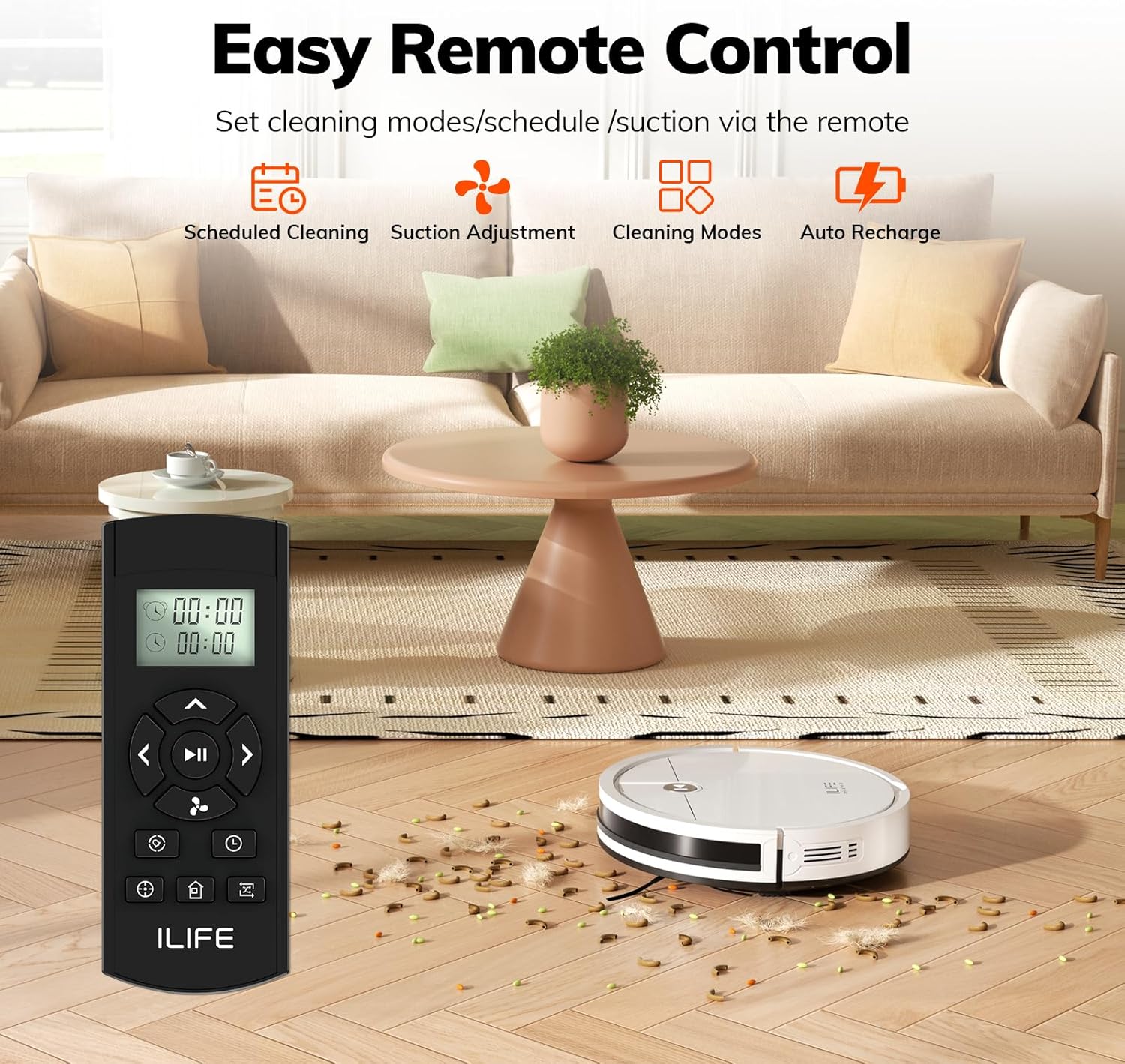
Yes — all four models operate via a physical remote or onboard button and do not require app connectivity to run a basic cleaning cycle. App features like scheduling, zone cleaning, and map editing add convenience but are not required for core function. This is one of the quiet advantages of budget units: less dependency on cloud infrastructure and proprietary apps that may lose manufacturer support after a few years.
How often do I really need to empty the dustbin with two shedding dogs?
Realistically, once to twice daily. With two actively shedding dogs, the bins on these units — particularly the ILIFE V2’s smaller 300 ml capacity — will fill within one cleaning session. Budget for the daily-empty habit before you buy, or weight your decision toward the ILIFE A30s’s larger 800 ml bin if you want more buffer between empties.
Is the ILIFE V2’s lack of a roller brush a problem on area rugs?
On low-pile area rugs, suction-only performance is generally adequate for surface debris. On thick-pile or shag rugs, a brush-assisted unit will pull more embedded debris from the fiber. The V2’s sweet spot is hard floors and low-pile surfaces; if your home is predominantly carpeted, a brush-equipped unit serves you better.
How long do budget robot vacuums typically last before needing replacement?
TechCrunch’s budget vacuum coverage (techcrunch.com, 2024 roundup) and aggregated owner review patterns both point to meaningful performance degradation — typically battery capacity reduction and suction loss — between 18 months and 3 years under regular daily use. Treating a sub-$100 unit as a consumable on a roughly 2-year replacement horizon makes the economics cleaner than expecting durable-appliance longevity.
The Decision Rule
If your floors are mostly open hard surface and you want the lowest possible maintenance overhead: Lefant M210. No tangle risk, strong fine-dust collection, and owner repeat-purchase rates that signal genuine satisfaction.
If you need to clean under low furniture — sofas, platform beds, low coffee tables: eufy 11S MAX. The 2.85-inch height advantage is real and matters in practice.
If you run hard floors with fine particulate or unusual debris such as sand, workshop dust, or craft debris: ILIFE V2. The off-grid durability data is meaningful evidence of robustness in demanding conditions.
If you have open-plan floors, do not need low-clearance access, and want systematic row-by-row coverage over random-bounce coverage: ILIFE A30s — but only if the 3.54-inch height clearance spec does not rule it out for your specific furniture situation. Measure first before you buy.
The one thing none of these buys you is freedom from the bin. If daily emptying sounds like a deal-breaker, that is the clearest signal in this entire guide: step up one tier and solve it at the source.