If you’ve been watching the robot vacuum aisle for more than a year, you’ve probably noticed something: the word “LiDAR” — short for Light Detection and Ranging, the spinning laser sensor that lets a robot build a map of your home instead of bumping around randomly — has migrated from the $500+ shelf down to units that cost less than a decent pair of work boots. That’s genuinely good news. But the spec sheet doesn’t tell you which parts of the LiDAR experience made the trip down-market and which parts got quietly left behind. That’s what we’re here to sort out. By the end of this article, you’ll know exactly what you’re buying at the sub-$200 price point, where you’ll feel the compromises in daily use, and which floor plans and household types can get away with the cheaper option without regret.
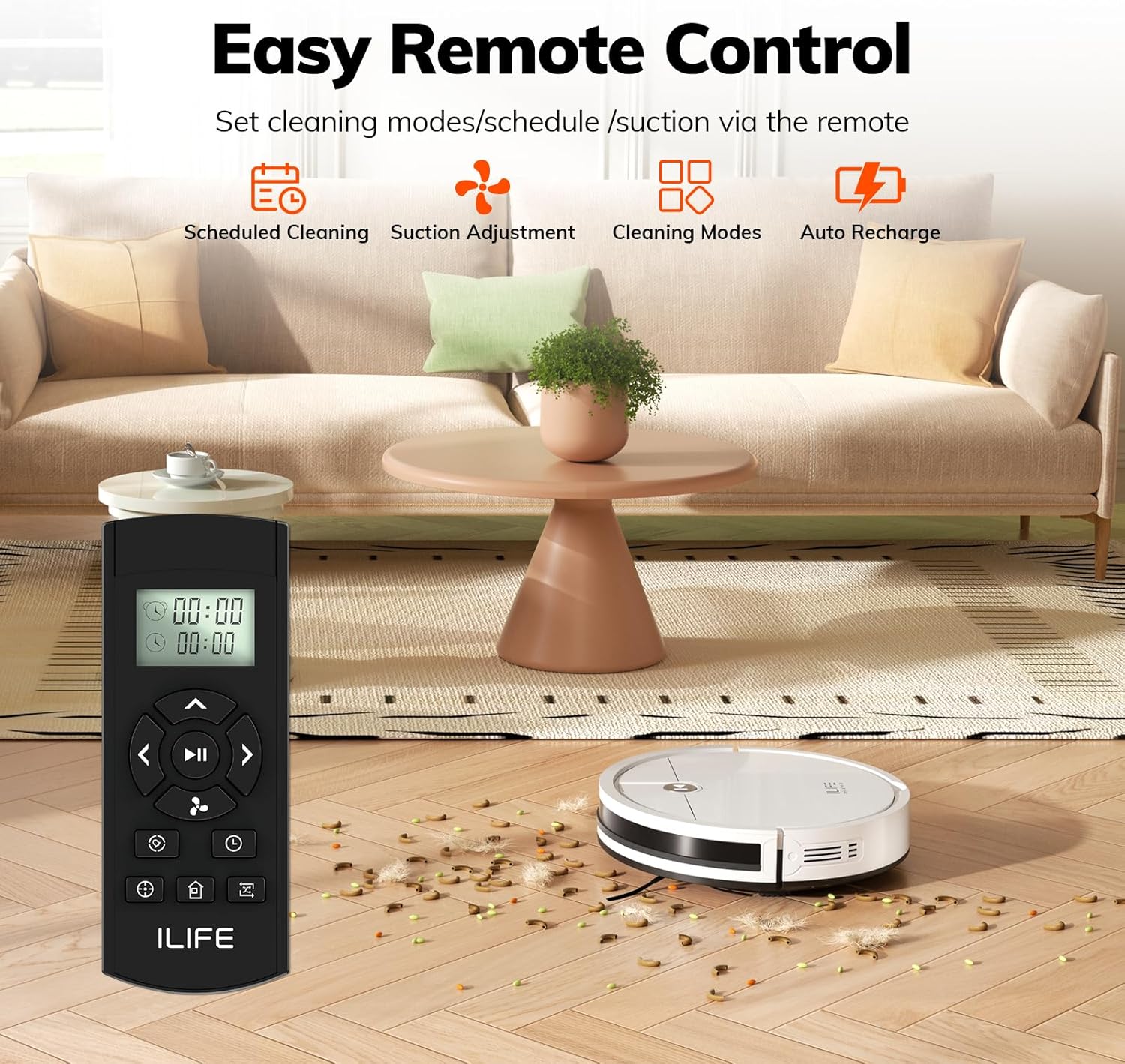
| EDITOR'S PICK[eufy Robot Vacuum 11S MAX](https://www.amazon.com/dp/B07R295MLS?tag=greenflower20-20) | Mid-tier[Lefant Robot Vacuum Cleaner](https://www.amazon.com/dp/B08R9LK9K3?tag=greenflower20-20) | Budget pick[ILIFE V2 Robot Vacuum Cleaner](https://www.amazon.com/dp/B0F4DKGRDN?tag=greenflower20-20) | |
|---|---|---|---|
| Runtime | — | 120 Mins | 120 Mins |
| Height | Super Thin | Slim | Slim |
| App Control | — | ✓ | — |
| Noise Level | Quiet | Low Noise | — |
| Tangle-Free | — | — | ✓ |
| Price | $159.99 | $149.99 | $79.99 |
| See on Amazon → | See on Amazon → | See on Amazon → |
What “LiDAR” Actually Means at This Price Point
Let’s be precise about terms, because marketing has gotten sloppy here in ways that cost real money.
True LiDAR — the rotating time-of-flight laser module you’ll find in Roborock S-series and Ecovacs Deebot T-series flagships — gives a robot a 360-degree, high-resolution point cloud it refreshes multiple times per second. That continuous map means the robot knows where furniture moved, can recover gracefully from getting stuck, and can execute room-by-room cleaning schedules reliably.
What you get in most sub-$200 units is one of two cheaper alternatives:
Downward-facing structured light or single-point infrared arrays dressed up in marketing copy that says “smart navigation” or “intelligent mapping.” These sensors are fine for obstacle detection but build maps poorly, if at all.
Entry-grade rotating LiDAR — real, but lower sample-rate and paired with less capable processors. This is the interesting category, because some units here actually work reasonably well.
The practical tell: if a sub-$200 unit’s product page doesn’t show you a floor plan map it generated — an actual room-layout image, not a cartoon illustration — it almost certainly does not have functional mapping LiDAR. Wired’s 2025 coverage of the budget robot vacuum segment specifically calls out this pattern, noting that “mapping” in marketing copy often refers to a basic grid-coverage algorithm, not persistent spatial mapping.
The units that do show real maps (and we’re seeing a handful in the $150–$200 window from brands like Yeedi, Lefant, and Ecovacs’ own entry line) represent a genuine technological democratization. The question is what the tradeoffs look like in practice.
Where Budget LiDAR Actually Holds Up
Here’s the good news, and it’s real: for straightforward floor plans, budget LiDAR units have narrowed the gap considerably.
Open-plan single-level homes. If your main living area is a connected kitchen-living room with clear sightlines and minimal furniture density, a $160–$180 LiDAR unit will produce a usable map on the second or third run and maintain it reasonably well. The New York Times Wirecutter’s ongoing robot vacuum coverage consistently notes that navigation accuracy differences between tiers shrink dramatically in low-clutter environments.
Hard floors and low-pile rugs. The suction motors and brush rolls in budget units have actually improved faster than the navigation stack. Owners of entry Ecovacs and Yeedi units consistently report solid performance on hardwood, tile, and low-pile carpet — the kind of cleaning that doesn’t demand the robot execute complex maneuvers.
Supplemental cleaning between deep cleans. If you’re running a robot vacuum daily as a maintenance pass — keeping pet hair and dust from accumulating rather than replacing a full vacuum session — the tolerance for occasional missed strips or redundant coverage is high. A $180 unit doing 80% of the job every day is often a better real-world outcome than a $500 unit used weekly.
Smaller square footage. The Robot Report’s 2024 analysis of SLAM (Simultaneous Localization and Mapping) in consumer robots notes that map complexity scales with room count and total area. Below roughly 800 square feet, budget SLAM implementations struggle less because the spatial problem they’re solving is genuinely simpler.
By the Numbers
| Price tier | Typical LiDAR type | Map persistence | Multi-floor support | Obstacle avoidance |
|---|---|---|---|---|
| Under $100 | Infrared / gyro | None | No | Basic bump |
| $100–$150 | Entry structured light | Limited / unreliable | Rarely | Moderate |
| $150–$200 | Entry rotating LiDAR | Usable, improves over time | Sometimes | Decent in open spaces |
| $300–$500 | Mid-grade rotating LiDAR | Reliable, editable | Yes | Good |
| $500+ | Full LiDAR + vision fusion | Excellent | Yes | Strong |
Where Budget LiDAR Cuts Corners You’ll Actually Feel
This is where we earn the honest-verdict part of the title.
Multi-room segmentation falls apart. Even sub-$200 units that generate maps frequently fail at room-boundary detection. The robot can’t reliably distinguish your bedroom from your hallway, which means room-specific cleaning schedules — one of the marquee features of mid-range navigation — either don’t work or require manual boundary drawing that defeats the point. IEEE Spectrum’s coverage of consumer robotics notes that room segmentation requires both sufficient sensor resolution and substantial on-device compute, and that’s precisely where budget bills of materials get cut.
Map drift under furniture. Budget LiDAR setups use slower processors running simplified SLAM algorithms. Over time — especially in areas with low furniture legs, mirrors, or glass surfaces that scatter laser returns — the map drifts from reality. Owners of entry-grade mapping robots frequently report that after a few weeks, the unit starts taking strange routes or misses sections it previously cleaned. This isn’t catastrophic, but it means you’ll occasionally need to delete and rebuild the map. With a premium unit, that’s rare. At this tier, it’s periodic maintenance.
Cliff detection and carpet-edge reliability. The depth-sensing that prevents a robot from falling down stairs is separate from the navigation LiDAR, and it’s an area where cost-cutting is less visible but more consequential. Wired’s budget vacuum coverage flags that some units in the $150–$180 range have shown inconsistent cliff detection in user reports, particularly on dark-colored carpet edges that absorb infrared. If you have stairs and dark rugs, this deserves research into specific model owner feedback before buying.
Firmware update cadence and app longevity. This is the hidden cost that specs never show. Mid-range and premium robot vacuum makers — Roborock, iRobot (now under Amazon), Ecovacs’ upper lines — have track records of multi-year firmware support and active app development. Many budget-tier brands, including some house brands sold through major retailers, have discontinuous update histories. Per The Robot Report’s 2024 review of the budget navigation landscape, several well-reviewed sub-$200 units from 2022–2023 stopped receiving meaningful app updates within 18 months of release. A robot vacuum that works fine today but loses cloud features or app connectivity in year two is a different total cost of ownership calculation than it first appears.
No-go zone reliability. Virtual walls and no-go zones — digital barriers you draw in the app to keep the robot out of certain areas — are another feature that sounds equivalent across price tiers but behaves differently. Budget units with lower map fidelity tend to honor no-go zones loosely, with more drift at zone edges. If you have a pet feeding station, open cabling, or other areas where you genuinely can’t have the robot enter, the $150 unit’s zone compliance may not be tight enough to trust.
The Decision Framework: If X, Then Y
Here’s the honest decision rule after reviewing the aggregated owner data, editorial coverage from Wirecutter and Wired, and published spec comparisons:
If your home is under 1,000 square feet, single-level, mostly hard floors, and you’re doing daily maintenance runs: a $160–$180 LiDAR unit is a defensible buy. You’ll trade away room scheduling and map reliability for a meaningfully lower price, and the core cleaning performance will hold up. Look specifically for units that show actual user-generated floor plan images — not marketing illustrations — in their review coverage, which confirms the mapping feature is functional.
If your home has stairs, multiple levels, or you want reliable room-specific scheduling: the sub-$200 tier will frustrate you within three months. The $280–$400 range is where multi-floor and room segmentation start actually working. The $100+ premium buys you a qualitatively different experience, not just marginally better execution of the same features.
If you have significant dark-colored carpet or area rugs near stairs: prioritize specific owner feedback on cliff detection for any unit you’re considering. This is non-negotiable safety behavior and it’s the one area where you should not accept uncertainty from a budget unit.
If app longevity matters to you — if you want to be able to control this robot from your phone and receive feature updates three years from now — research the brand’s support history, not just the current feature list. Ecovacs’ entry-tier products have historically received longer support than some competing house brands, though Wirecutter’s 2025 coverage notes that even Ecovacs has been inconsistent with budget-line updates. Roborock’s entry into lower price points is newer and worth watching.
If you’re a renter or in a transitional living situation where you’ll move in the next 12–18 months: the budget tier’s occasional map-rebuild requirement matters less. A map that drifts works fine if you periodically reset it, and a robot that serves you adequately for a year before you move is a fine outcome for $170.
One More Cost to Bake In
Consumables. Brush rolls, filters, and side brushes need replacement every 3–6 months depending on use. For budget units, these are available, but they’re sometimes only available through the brand’s own app store or specific third-party sellers — and compatibility varies by firmware version in ways that catch buyers off guard. Per Wirecutter’s robot vacuum consumables guidance, budget for roughly $20–$40 per year in replacement parts, and verify before buying that the consumables for your specific model are readily sourced. A robot vacuum whose filters aren’t available 18 months in is a landfill item, not a long-term tool.
The sub-$200 LiDAR category is genuinely useful — just not universally. Know your floor plan, know your expectations, and spend the extra $100 only if the features that break at this tier are features you’ll actually use.