No-Map Robot Vacuums vs. LiDAR Budget Models: What First-Time Owners Actually Experience
If you’ve been shopping for a robot vacuum, you’ve probably noticed two very different philosophies sitting side by side on the shelf. One group — often called bump-and-go or no-map models — navigate by bouncing off furniture and walls, cleaning in unpredictable patterns until they run out of battery or time. The other group uses LiDAR (Light Detection and Ranging — a spinning laser that measures distance to build a real-time floor map) to plan deliberate, systematic cleaning routes. The price gap between these two categories has shrunk considerably heading into mid-2026, which is exactly why the choice has gotten harder. A $79 no-map unit and a $250 entry LiDAR model now share the same search page, and owners on both sides swear they made the right call. This article cuts through the noise by pulling together what long-term owners and aggregated reviewers actually report — no lab bench, just documented real-world patterns — so you can make a decision you won’t regret in six months.
| EDITOR'S PICKeufy Robot Vacuum 11S MAX | Mid-tierLefant Robot Vacuum Cleaner | Budget pickILIFE V2 Robot Vacuum Cleaner | |
|---|---|---|---|
| Runtime | — | 120 mins | 120 mins |
| App control | — | ✓ | — |
| Voice control | — | ✓ | — |
| Price | $159.99 | $149.99 | $79.99 |
| See on Amazon → | See on Amazon → | See on Amazon → |
What No-Map Owners Consistently Report
The Debris Surprise — and Why It Happens
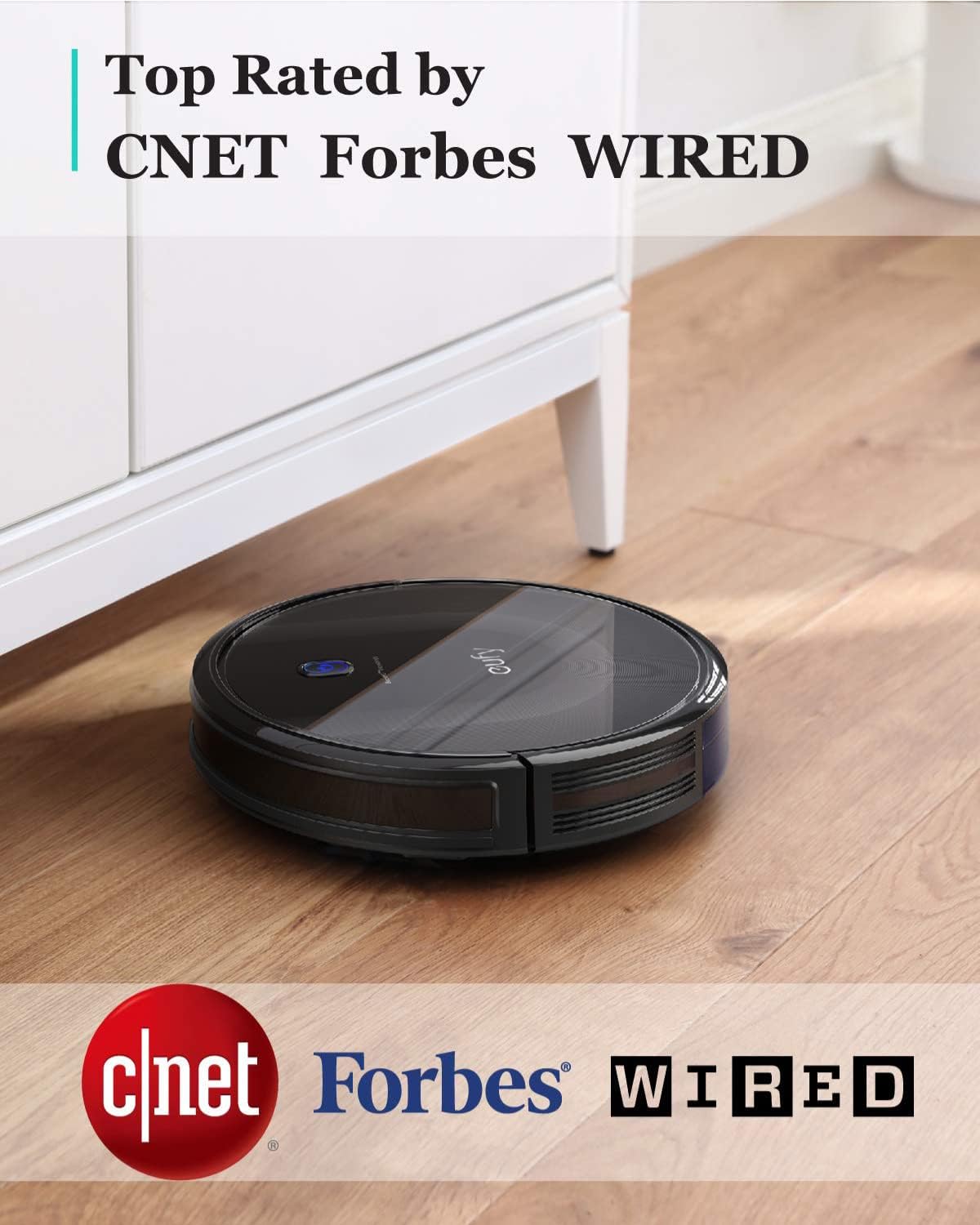
The most common first reaction from no-map robot vacuum owners — particularly buyers of models like the Eufy 11S MAX — is genuine shock at how much debris was sitting on floors they considered clean. That pattern shows up consistently enough across long-term owner accounts that it’s worth taking seriously: your eyes are a worse floor inspector than a robot running a full circuit at 3 a.m. every night. The Wirecutter (New York Times), in their ongoing review series titled “The Best Robot Vacuums,” has noted this phenomenon across multiple no-map models, attributing it to cleaning frequency rather than any particular suction superiority.
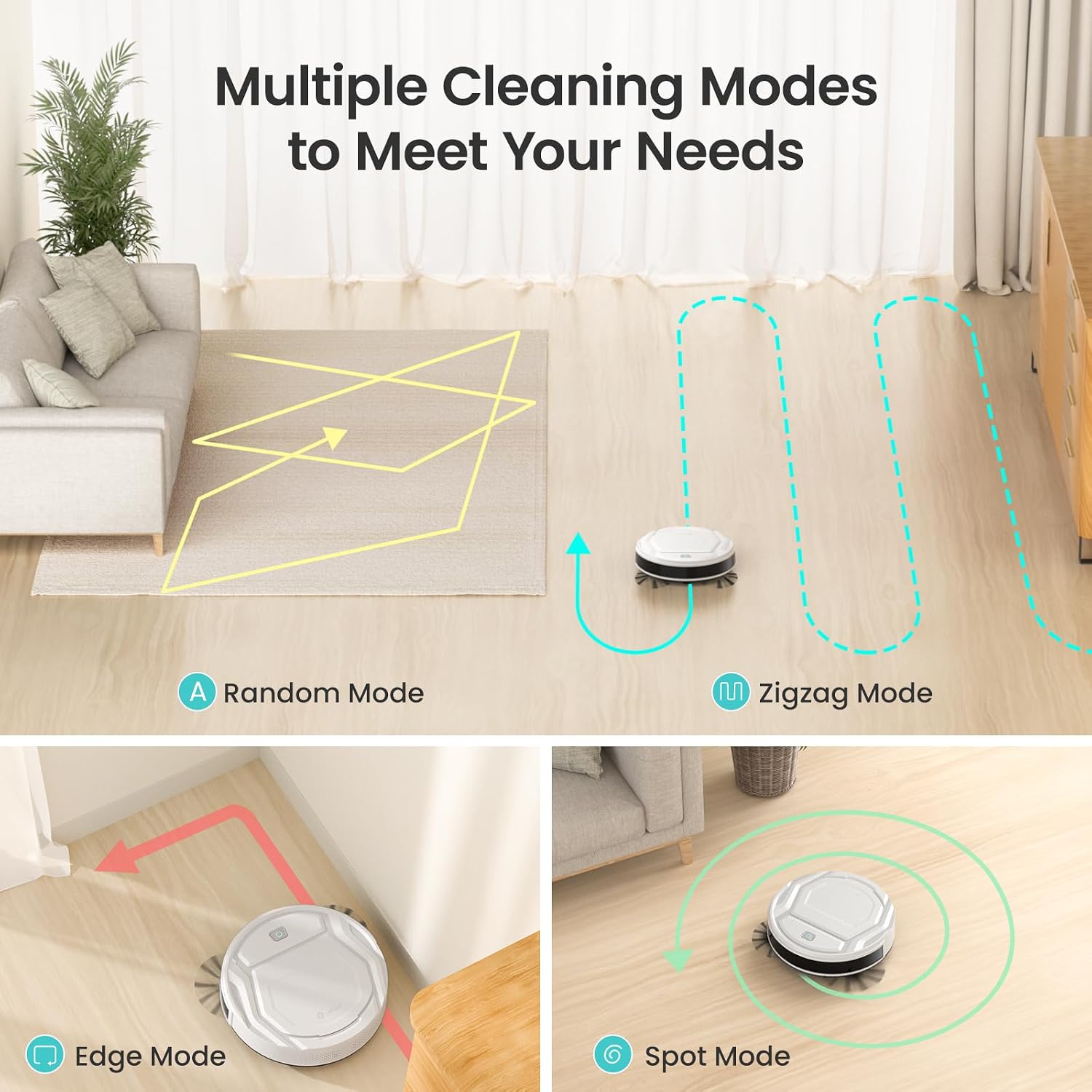
The honest tradeoff: no-map models earn that debris collection through repetition, not intelligence. Because they navigate randomly, they compensate by running longer and revisiting areas multiple times. On a 400-square-foot studio apartment, that’s fine — the robot will eventually cover everything in a reasonable run. On a 1,200-square-foot open floor plan, coverage becomes genuinely inconsistent. A documented pattern from aggregated reviewer accounts describes no-map units cleaning a single kitchen corner multiple times during a 90-minute session while leaving a dining room strip entirely untouched. That’s not a defect — it’s the fundamental design tradeoff of random navigation.
ILIFE
$79.99
In stock on Amazon
Check price on AmazonThe Erratic Spinning Problem and Its Cause
A subset of no-map owners report a specific failure mode: the robot enters a stop-rotate-repeat loop, spinning in place or bouncing between two nearby obstacles without making forward progress. The most documented cause is cliff sensors misreading dark rugs or low-contrast flooring as drop-offs, triggering the robot’s fall-prevention behavior in a loop. Outdated firmware is the most common contributing factor, with secondary causes including debris lodged in the bumper sensor and low-battery states that trigger a confused return-to-dock sequence when the dock signal is weak.
If you own or are evaluating a bump-and-go model, check the manufacturer’s support page for firmware updates before your first run. This is one of those “obvious in hindsight” steps that costs nothing and prevents the most common complaint in the category.
ILIFE
$79.99
In stock on Amazon
Check price on AmazonLong-Term Durability: The Brush-Free Advantage
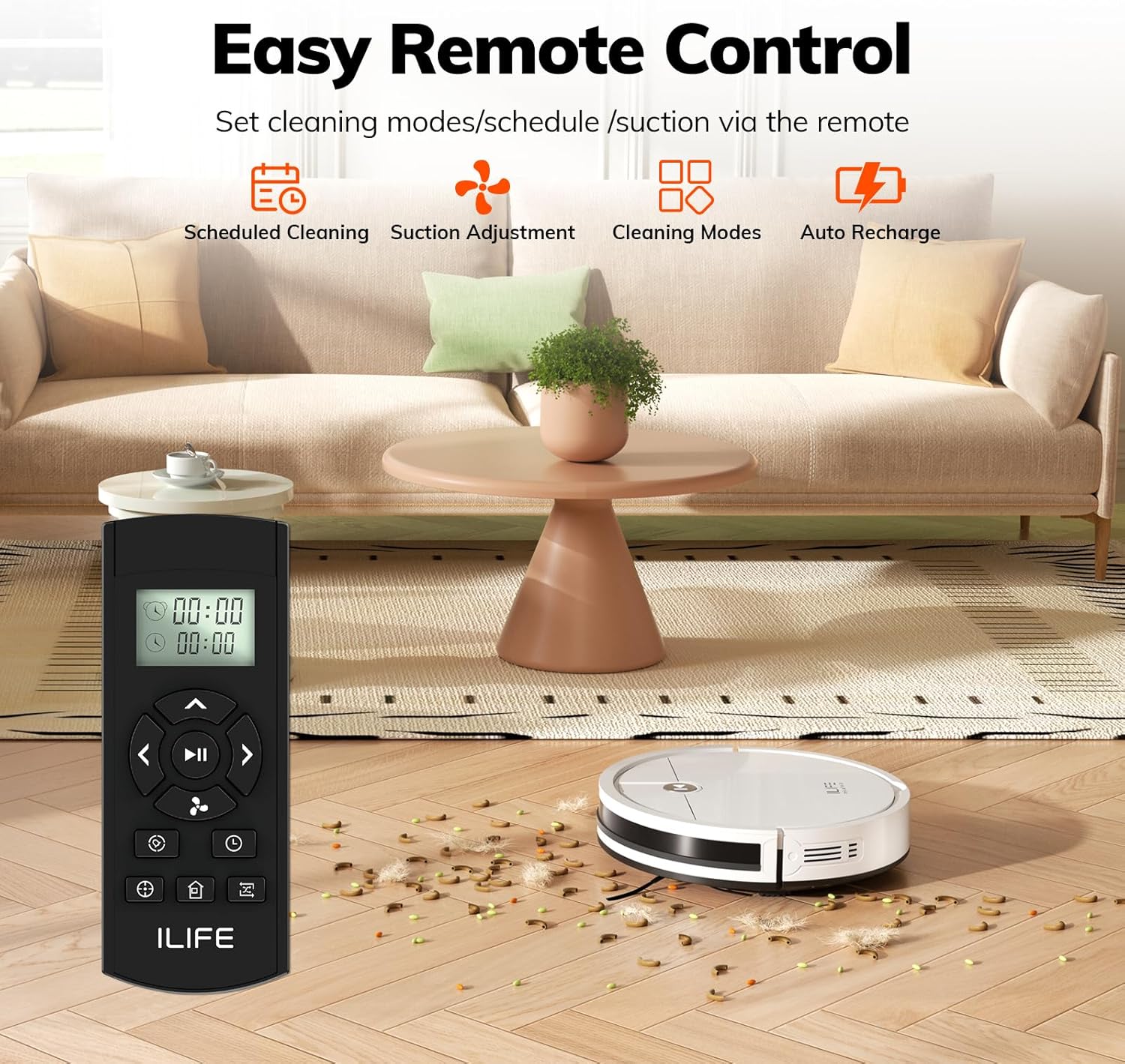
Durability data on budget robot vacuums is hard to find because manufacturers don’t publish it and most reviewers move on after a few weeks. The exception comes from long-term owners who’ve stuck with the same unit for years. The ILIFE V2 — a brushroll-free design that routes debris directly through suction — has generated documented five-plus-year daily-use accounts from owners who cite the absence of a brushroll as the key reliability factor. There’s simply less to break: no bristles to tangle, no brush bearings to wear, no hair-wrap failure mode that takes out cheaper brush-roll models.
The suction-only approach is legitimately clever engineering for owners whose primary values are daily runtime and minimal maintenance. LiDAR models, which carry more electronics and more moving parts, haven’t had enough time in the budget-tier market to match this durability track record statistically.
ILIFE
$79.99
In stock on Amazon
Check price on AmazonWhat LiDAR Budget Owners Report Differently
Systematic Coverage as the Core Value Proposition
Owners who upgraded from bump-and-go models to entry-level LiDAR units — such as the Roomba Combo j5, now available in the sub-$350 tier — consistently describe the experience as qualitatively different, not just incrementally better. What they’re reacting to is systematic coverage: LiDAR models draw a map of your floor on the first run, then clean in methodical parallel rows. When it’s done, it’s done — you know the whole floor was covered, not just statistically likely to have been covered.
IEEE Spectrum, in its technical coverage of consumer robot navigation systems, explains why this matters mechanically: random-walk algorithms require significantly longer run times to achieve equivalent coverage probability compared to planned-path algorithms, and on floors above roughly 700 square feet, the gap between “statistically likely covered” and “definitely covered” becomes practically meaningful for owners.
Lefant
$149.99
In stock on Amazon
Check price on AmazonFloor Size and the Coverage Math
For owners with one floor and no complex furniture arrangements, the question is whether LiDAR’s systematic coverage justifies its cost premium. Based on aggregated owner reports and coverage analysis from IEEE Spectrum’s reporting on consumer robot navigation, the answer depends heavily on floor size and furniture density:
- No-map models on floors under 600 sq ft: Owner-reported coverage satisfaction is generally high, with most areas reached within a standard 90-minute run.
- No-map models on floors 800–1,200 sq ft: Coverage gaps are reported by a meaningful minority of owners, particularly in furniture-dense rooms.
- LiDAR models across all single-floor sizes: Systematic coverage is the primary satisfaction driver, regardless of square footage, per the Wirecutter’s “The Best Robot Vacuums” review series (New York Times).
- LiDAR price floor as of Q2 2026: Approximately $200–$250 for capable entry models, per TechCrunch’s 2025 Robot Vacuum Buying Guide — still directionally accurate in current market conditions.
The amortization math: if you run either type daily for a year, the LiDAR model’s higher upfront cost works out to roughly $0.55–$0.70 per day more than a $100 no-map alternative. That’s before you factor in whether you’ll actually trust the no-map model to have finished the job — or whether you’ll be spot-checking with a traditional vacuum, which erases much of the time-saving value.
Lefant
$149.99
In stock on Amazon
Check price on AmazonSelf-Emptying Complexity vs. Reliability
The ILIFE A30s sits at an interesting intersection of this debate. Long-term multi-robot owners who have cycled through self-emptying LiDAR models and returned to simpler units cite a consistent reason: self-emptying base stations introduce a meaningful failure surface. Motors, sensors, seals, and filters in the base can malfunction independently of the robot itself, and troubleshooting a base-station failure is a qualitatively different maintenance experience than emptying a dustbin manually.
For owners who’ve been through one reliability incident with a base station, the simplicity of a manual-empty dustbin starts looking like a feature rather than a limitation. The ILIFE A30s doesn’t offer LiDAR mapping, but it offers a track record — and experienced multi-robot owners weighing complexity against reliability sometimes choose the simpler system deliberately. Simpler systems complete more runs without intervention. Completed runs beat theoretical capability every time.
Lefant
$149.99
In stock on Amazon
Check price on AmazonWhere Lefant Models Fit the Narrative
Escape Behavior as a Genuine Differentiator
Lefant models — particularly the M201 and T800 series — generate a recurring owner claim: that the robot outperforms more expensive units the owner previously owned. When you examine what owners are actually praising, it’s almost always one specific capability: escape behavior. Lefant’s obstacle-detection tuning appears calibrated to prioritize getting unstuck from tight spaces — chair legs, table bases, furniture clusters — over aggressive suction power.
For homes with dense furniture arrangements, that calibration is genuinely valuable. A more powerful robot that beaches itself and requires manual rescue every third run is functionally worse than a lighter robot that completes its run unassisted. The documented tradeoff: multiple owners note Lefant struggles with larger debris like cereal or dry pet food. It’s a coverage-over-capacity machine, and “outperforms” should be read narrowly — in furniture-dense rooms under the right conditions, not on open floors where a well-functioning LiDAR unit is simply superior.
ILIFE
$79.99
In stock on Amazon
Check price on AmazonComparing the Two Categories Side by Side
To make this concrete, here’s how the two approaches stack up across the ownership dimensions that matter most to first-time buyers:
| Dimension | No-Map (Bump-and-Go) | Budget LiDAR |
|---|---|---|
| Starting price (mid-2026) | $75–$130 | $200–$350 |
| Coverage on floors under 600 sq ft | Generally adequate | Systematic and confirmed |
| Coverage on floors over 800 sq ft | Gaps documented | Systematic and confirmed |
| Furniture-dense rooms | Lefant-class escape tuning helps | Depends on obstacle avoidance tier |
| Long-term durability (brush-free) | 5-yr accounts documented (ILIFE V2) | Insufficient budget-tier data yet |
| Self-emptying option | Rare at this tier | Available; adds failure surface |
| Maintenance complexity | Low — manual empty, weekly brush check | Moderate — base station adds components |
ILIFE
$79.99
In stock on Amazon
Check price on AmazonLefant
$149.99
In stock on Amazon
Check price on AmazonBrush and Filter Maintenance: The Ownership Cost Nobody Budgets For
Across both no-map and LiDAR budget models, owner reports cluster around the same maintenance guidance that Wired captures well in their buyer’s guide “The Best Robot Vacuums We’ve Tested”: budget for weekly brush cleaning and monthly filter inspection if you have pets; biweekly brush cleaning and every-six-weeks filter inspection without pets.
That sounds manageable until you price the consumables. Generic filters for ILIFE and Lefant models run roughly $8–$15 for a three-pack. Eufy and Roomba-compatible filters at the budget tier are similar. The hidden cost isn’t the filter itself — it’s that owners who skip maintenance cycles report a measurable drop in suction performance within 60–90 days, then attribute the degraded performance to the robot “wearing out” when it’s actually just clogged. Build $30–$50 per year in consumables into your ownership math, and set a recurring phone reminder — this is one of those maintenance steps where the cost of ignoring it (a robot that underperforms and gets replaced early) exceeds the cost of staying on schedule by a wide margin.
Frequently Asked Questions
Does a robot vacuum without mapping actually clean the whole floor? On smaller floors (under 600–700 square feet with open layouts), owner reports suggest most areas get covered within a standard 60–90 minute run — though not in any predictable order, and some spots will be hit multiple times while others are missed on any given cycle. On larger or furniture-dense floors, documented coverage gaps are real. “Statistically likely to clean the floor” is not the same as “guaranteed to clean the floor.”
How long do budget robot vacuums last with daily use? The best-documented cases come from brush-free designs like the ILIFE V2, with five-plus-year daily-use accounts appearing consistently in long-term owner records. Brush-free models appear to outlast brush-roll models at the budget tier based on documented failure modes. LiDAR models have more electronics and more potential failure points; the category hasn’t been in the budget tier long enough for comparable five-year durability data to exist at scale.
Does the Lefant really outperform more expensive models as some owners claim? In specific, narrow conditions — yes. Lefant’s escape behavior in furniture-dense rooms is a genuine capability advantage over higher-suction robots that get stuck more easily. But “outperforms” is doing a lot of work. Neither Lefant nor ILIFE cleans more thoroughly than a well-functioning LiDAR unit on an open floor. The claims hold in the specific contexts owners describe; they don’t generalize.
What causes erratic spinning or stopping behavior? The most documented cause is cliff sensors misreading dark rugs or low-contrast flooring as drop-offs. Outdated firmware is the most common contributing factor. Secondary causes include debris stuck in the bumper sensor and low-battery states triggering confused dock-return sequences.
Is LiDAR worth the price premium for a single-floor home? If your floor is under 600 square feet and relatively open, the no-map category has a reasonable case at the $79–$130 price point. If your floor exceeds 800 square feet, has significant furniture density, or you want documented confidence that the whole floor was covered — LiDAR’s systematic coverage has a clear functional advantage. The price gap as of mid-2026 is narrow enough that the “it’s not worth it” argument is harder to sustain than it was two years ago.
How often do you actually need to clean brushes and filters? Weekly brush checks and monthly filter inspections are what Wired’s buyer’s guide “The Best Robot Vacuums We’ve Tested” recommends, consistent with most manufacturers’ documentation. Owners who skip this schedule report noticeable suction loss within 60–90 days. Budget $30–$50 per year in consumables and treat it as a fixed operating cost, not an optional one.
The Decision Rule: Match Your Floor to Your Model
If you’re on a floor under 700 square feet, have minimal furniture obstacles, and want to validate that robot vacuuming is worth the habit before spending more — start with a no-map model. The Eufy 11S MAX or ILIFE V2 will genuinely surprise you with how much debris they collect, and the five-year durability case for the brush-free design is real. Update the firmware on day one.
If you have a larger floor, furniture-dense rooms, or you’ve already owned a bump-and-go model and found yourself spot-checking its work with a traditional vacuum — the LiDAR price premium is justified. Systematic coverage eliminates the “did it actually clean that corner?” doubt, and at current mid-2026 pricing, entry LiDAR models are close enough in cost to no-map units that the gap rarely survives an honest two-year total-cost-of-ownership comparison.
And if you’re a multi-robot household weighing self-emptying complexity against reliability — the experienced owners who returned to a manual-empty model like the ILIFE A30s for simplicity’s sake are worth taking seriously. Fewer failure surfaces mean more completed runs. Completed runs beat theoretical capability every time.