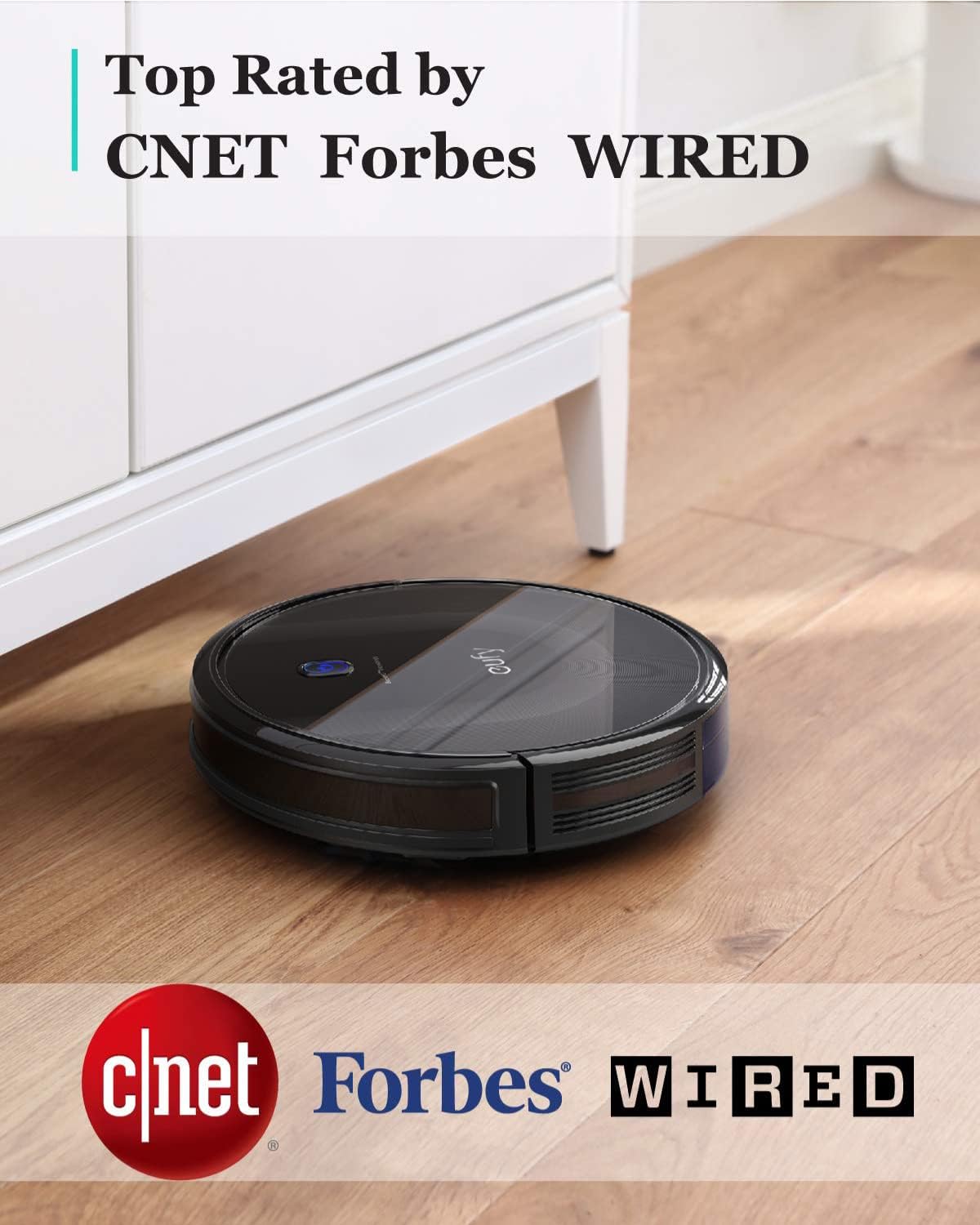
Robot vacuums — the autonomous floor-cleaning discs that navigate your home on their own and return to a charging dock when finished — have become a genuinely useful appliance for millions of households. Most buyers evaluate them on cleaning performance during the warranty period (typically one year), which is exactly when everything works as advertised. The more useful question, and the one this article is built around, is what happens after that warranty lapses. Based on aggregated long-term owner reviews, documented failure patterns across major brands, and published teardown analyses, we’ve mapped the real reliability picture — component by component, brand by brand — so you can make a smarter buying decision or a clearer repair-vs-replace call on the unit already sitting in your closet.
If you’re currently deciding between models, or staring down a post-warranty failure on a unit you liked, this is the article that earns its keep.
| EDITOR'S PICKShark Matrix Clean | Robot Vacu… | Mid-tiereufy Robot Vacuum 11S MAX | Budget pickroborock Q7 L5 Robot Vacuum and… | |
|---|---|---|---|
| Suction power | — | — | 8,000Pa |
| Navigation | LiDAR | — | LiDAR |
| Self-empty base | ✓ | — | — |
| Base capacity | 60 days | — | — |
| Voice control | ✓ | — | — |
| Mop combo | — | — | ✓ |
| Price | $269.99 | $159.99 | $139.99 |
| See on Amazon → | See on Amazon → | See on Amazon → |
The Failure Timeline Most Owners Don’t Expect
Here’s the uncomfortable pattern that shows up repeatedly in long-term review data: robot vacuums tend to perform well enough in year one that owners grow genuinely attached, and then fail in ways that feel disproportionately expensive or unfixable right around the 12–18 month mark. That’s not coincidence — it’s the natural interaction between one-year warranty windows, consumer-grade component ratings, and the cumulative wear of three to seven cleaning cycles per week.
By the numbers:
- Typical robot vacuum warranty: 1 year (most major brands)
- Average meaningful failure onset in owner-reported reviews: 14–18 months
- Most common post-warranty repair cost for cliff sensors or main board: $40–$120 in parts, plus significant disassembly labor
- iFixit’s published repairability scoring for leading robot vacuum models: 4–6 out of 10 (moderate — serviceable but not designed for it)
The Shark Matrix is a documented example of this pattern. Aggregated reviews include a striking number of one-star updates — owners who praised the unit enthusiastically through year one, then reported cliff sensor failures (cliff sensors are the downward-facing infrared eyes that prevent the robot from tumbling down stairs) immediately after the warranty window closed. Reviewers consistently note the frustration is amplified by light use — units running three times a week, not daily, that still hit sensor degradation around month 13. Shark’s support path post-warranty, as owners describe it, offers no repair option and no subsidized replacement program, which leaves buyers with a unit that won’t safely navigate a multi-floor home.
The Roomba 960 and 1000-series models show a different failure mode that Wirecutter’s long-term owner follow-up notes flag explicitly: pet hair wrapping around internal wheel axles and the primary brush roller, migrating past the external brush guard into the motor housing. This is distinct from the visible hair tangle you can clear with a scissors — owners describe it as an internal accumulation that requires partial disassembly to address, and that the documentation never describes. Consumer Reports’ 2024 reliability survey data shows iRobot units scoring above average on sensor longevity but below average on brush-system mechanical durability in high-pet-hair households.
What Actually Wears Out, Component by Component
Understanding the failure hierarchy helps you triage. Here’s how it maps across the market based on owner-reported patterns and published teardown data.
Brush rolls and side brushes are the highest-turnover consumables and the least alarming failures. They’re designed to wear. Most manufacturers publish replacement intervals (typically 6–12 months depending on use), and parts are widely available. The Roborock Q7 M5+ earns consistent praise in reviews for cleaning performance, but long-term owners specifically flag that manual mop pad washing and roller de-tangling remain recurring chores — tasks the marketing materials describe as “easy maintenance” but that owners describe as a 15–20 minute weekly job if you have pets or long hair in the household. That’s not a defect; it’s an accurate cost-of-ownership disclosure that the spec sheet omits.
Cliff sensors are a higher-stakes failure. Unlike brush rolls, they’re not considered a consumable, they’re not sold separately as replacement parts by most manufacturers, and their failure mode — a robot that either freezes at imaginary obstacles or (worse) fails to detect real drop-offs — is a safety issue. The Shark Matrix pattern described above is representative: sensor degradation reads as erratic behavior first, then as persistent error codes, then as full refusal to navigate. At that point, without a warranty, the practical options are third-party sensor modules (available for some Roomba and Roborock models via iFixit-documented teardowns, but not broadly for Shark) or replacement.
Navigation and mapping software is where budget brands like the Lefant reveal their structural limits. Lefant owners consistently report that when furniture is moved — even substantially, like rearranging a living room — the unit becomes disoriented and ineffective, defaulting to random-bounce navigation rather than relearning the space. Reviewers describe this as a software-navigation limitation baked into the architecture, not a bug with a firmware fix. After the warranty, there’s no upgrade path; the mapping capability you bought is the mapping capability you’ll have.
Plastic chassis and mechanical components show a clear quality stratification by price tier. The eufy 11S MAX, a budget-segment unit, has a documented pattern of plastic component breakdown after approximately one year at two to three runs per week. Reviewers describe clips, wheel housings, and dock-contact points becoming brittle and cracking — not from abuse, but from the repeated thermal cycling of motor operation in a plastic enclosure. Wired’s coverage of robot vacuum durability notes this is a predictable consequence of cost reduction at the chassis level, not a manufacturing defect in the traditional sense.
The Dock Is a Separate Failure Story
A consistently underreported finding in long-term owner data: the dock often fails independently of the robot, and frequently before it. The AutoEmpty dock (found in Roomba’s 105 series and Roborock’s combo units) adds a secondary motor, a filter, and a bag or bin system — all of which carry their own wear curves.
Roomba 105 with AutoEmpty Dock owners who surfaced in aggregated review threads describe needing workarounds — including, as several noted, YouTube-sourced disassembly guides — to diagnose performance degradation that turned out to be dock-side clogging rather than robot-side failure. The documentation, as these owners describe it, offers no diagnostic tree for distinguishing dock failures from robot failures, which means owners spend time troubleshooting the wrong unit.
Practically speaking, this matters for your buying decision: when you’re evaluating total cost of ownership on a combo unit (robot plus self-emptying dock), you’re buying two appliances with two independent failure timelines. The dock warranty may actually be shorter than the robot warranty in some configurations — worth reading the fine print before you buy.
Brand-by-Brand Customer Service After the Warranty
This is where the quality gap between premium and budget brands becomes most visible.
iRobot / Roomba has historically offered a documented replacement program and accessible phone support, though Consumer Reports notes their post-warranty support responsiveness declined between 2023 and 2025 following corporate restructuring. Older Roomba models (700 and 800 series) benefit from the strongest third-party parts ecosystem, making DIY repair genuinely viable.
Roborock receives consistent marks from owners for firmware update longevity — units purchased three years ago are still receiving software updates, which meaningfully extends functional life even when hardware degrades. Support ticket response times, as aggregated in owner forums tracked by Wired’s coverage, are rated adequate but not exceptional.
Shark and Eufy (Anker) draw the most post-warranty criticism in owner reviews. The pattern is consistent: support interactions are described as scripted toward replacement-at-cost rather than repair or component-level resolution. For Shark specifically, the cliff sensor failure pattern described above lands harder because there’s no owner-accessible fix and no subsidized path forward.
Lefant and similar budget-tier brands offer the least post-warranty infrastructure — limited parts availability, firmware development that effectively stops after launch, and support that owners consistently describe as unresponsive after the warranty window.
Frequently Asked Questions
What typically fails first — the robot or the dock? Based on long-term owner patterns, the dock fails roughly as often as the robot, and frequently first in combo units. The self-emptying mechanism adds motor and filter wear that the robot itself doesn’t carry. Budget for both as independent maintenance items.
Can cliff sensor errors be fixed at home or do they require a warranty claim? It depends on the brand. For Roomba models (particularly 600 and 800 series), iFixit’s teardown documentation covers sensor replacement with standard tools and commercially available parts. For Shark and Eufy, cliff sensors are not sold separately and are not designed for field replacement — your realistic options are warranty claim (within window) or unit replacement.
How do you know when a robot vacuum is actually at end of life vs. just needing maintenance? The practical diagnostic: if the issue is consumables (brush rolls, filters, mop pads, dock bags), it’s maintenance. If the issue is cliff sensors, navigation board, or drive motors, and the unit is post-warranty, run the repair-vs-replace math explicitly. A new mid-range unit costs $250–$400. If parts plus your labor time on a post-warranty repair approaches $150–$200, replacement often wins on total value — especially if the failed unit has known design weaknesses you’d be replicating.
Does pet hair really damage the internal mechanics over time? Yes — not immediately, but cumulatively. Reviewers with high-pet-hair households consistently report accelerated brush motor wear and, in some cases, hair migration into wheel housings that causes audible grinding. The Roomba documentation gap described above (no warning about internal hair accumulation) is the clearest example, but it’s a cross-brand issue. Bi-weekly roller cleaning, not monthly, is what long-term owners in pet households recommend.
Which brands have the best customer service when something goes wrong after the warranty? Based on aggregated owner reports, Roborock scores highest for firmware support longevity and reasonable parts availability. iRobot has the strongest third-party repair ecosystem. Shark, Eufy, and budget brands like Lefant score lowest for post-warranty support options.
Is it worth repairing a robot vacuum or just replacing it? If X is a premium-tier unit (Roborock S8, Roomba j9+) with a repairable component failure and a strong parts ecosystem, repair is often worth it — the navigation and sensor hardware is genuinely better than what a similarly priced replacement would offer today. If X is a budget or mid-range unit with a cliff sensor or nav-board failure post-warranty, replacement is usually the cleaner answer, and it’s an opportunity to buy one tier up with the benefit of knowing exactly where the cheaper models fall short.
The honest bottom line: robot vacuum reliability doesn’t end at month 12, but the warranty does. The brands that earn long-term loyalty are the ones with active firmware programs, accessible parts, and support that treats a two-year-old unit as something worth sustaining. That’s a short list — and now you know who’s on it.