If you’ve been researching STEM kits for a child in the 6–9 age range, you’ve probably noticed the labels don’t always tell the whole story. “Ages 8+” can mean anything from “a confident eight-year-old builds this alone in an afternoon” to “technically eight-year-old fingers can hold the pieces, but you’ll be doing most of the work.” These kits belong to a category called multi-build construction sets — kits that include enough parts to assemble several different functioning models rather than one fixed design — and they sit at the intersection of toy and teaching tool. Done well, they teach real engineering concepts: solar energy conversion, hydraulic pressure, remote-control signal transmission. Done poorly, they leave a frustrated kid and a pile of snapped plastic. This guide cuts through the age-label noise. We looked at aggregated buyer reviews, manufacturer documentation, and editorial guidance from Make.co on child development and fine motor readiness to give you an honest picture of what each kit delivers — and for whom.
The Three Kits at a Glance
Before diving into each product, here’s a quick orientation:
| Kit | Official Age Range | Realistic Independent-Build Age | Mechanism Type | Build Count |
|---|---|---|---|---|
| Sillbird 12-in-1 Solar | 8–13 | 9–10+ | Solar motor | 12 models |
| Opmind 5-in-1 RC Block | 6–12 | 6–7 (with light guidance) | RC / battery | 5 models |
| Thames & Kosmos Hydraulic Boxing Bots | 8+ | 8–9 (with adult) | Hydraulic (water) | 1 main build |
These aren’t just complexity differences — they’re fundamentally different types of building experience, which matters when you’re deciding what a specific child is ready for right now.
Head-to-Head: Which Kit Fits Which Child
Sillbird 12-in-1 Solar Robot Kit
The Sillbird 12-in-1 Solar Robot Kit is the ambition purchase in this category. Twelve buildable models — including a windmill, a puppy, a racing car, and an airboat — all powered by a single included solar panel. No batteries required for most configurations, which is a genuine long-term cost advantage and a talking point that lands with kids: “the sun is making it move” is a lesson that sticks.
The problem — and this is consistent across aggregated buyer reviews of the Sillbird product — is the gap between the official age label (8–13) and what independent assembly actually requires. Reviewers repeatedly surface a pattern: children on the younger end of that range need significant adult involvement. The instruction booklet relies primarily on diagrams rather than text, which helps non-readers but demands strong spatial reasoning to interpret. Small gear components, fine-tolerance snap-fits, and a solar panel connector that reviewers consistently describe as finicky all push the realistic independent-build floor to around age nine or ten.
That’s not a dealbreaker. It’s a framing decision. If you’re buying this for a confident, patient nine-year-old who likes methodical projects and can tolerate the frustration of a step that doesn’t click right the first time, the Sillbird delivers real value — twelve models means this kit stays on the shelf for months, not days. If you’re buying it for a seven-year-old who will hand it back after ten minutes of struggle, you’re buying yourself a project, not them one.
One real limitation reviewers don’t discuss enough: the solar panel’s sensitivity. Buyers in northern climates or apartment settings consistently note that the solar motor is underpowered in indirect or window-filtered light. On a cloudy day or indoors away from a south-facing window, some models simply won’t run. Factor this in if you don’t have reliable access to strong direct sunlight.
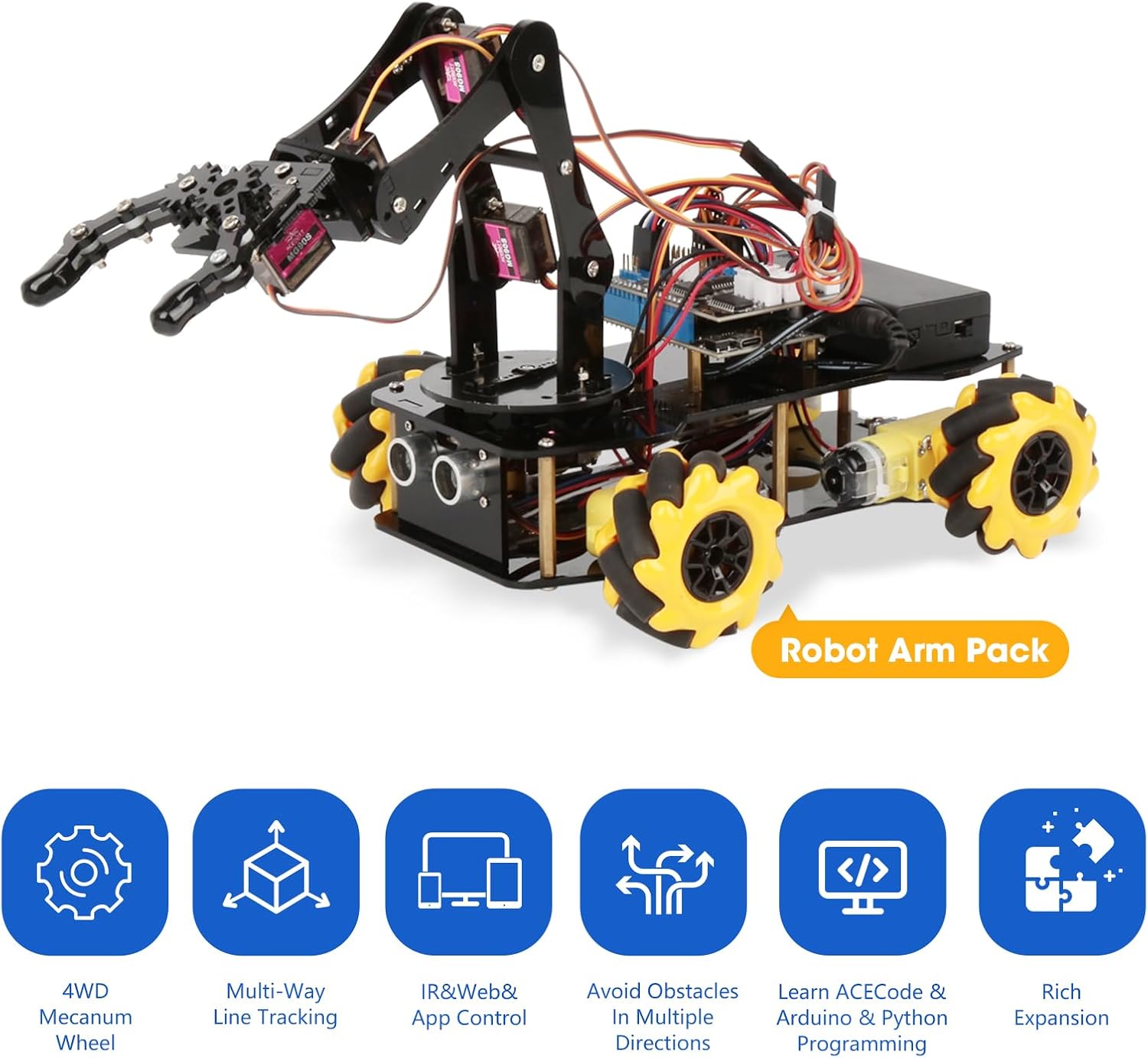
ACEBOTT
$106.67
In stock on Amazon
Check price on AmazonOpmind 5-in-1 RC Block Kit
The Opmind 5-in-1 RC Robot Building Blocks Kit is the outlier in this comparison — and in a good way. Where the Sillbird rewards patience and the Thames & Kosmos Hydraulic Boxing Bots demands collaboration, the Opmind is designed to get a younger child to a working, controllable robot faster. The block-based construction system — chunky, snap-together segments rather than tiny gear assemblies — dramatically reduces fine motor demands, and the remote-control element gives kids a payoff loop that younger children respond to strongly: build it, drive it, rebuild it as something else.
Aggregated review patterns show the youngest independently-satisfied builder in this cluster: a six-year-old who built one of the five configurations without adult help and drove it around the kitchen. That’s a genuine data point. It doesn’t mean every six-year-old will replicate that experience, but the design philosophy is clearly aimed at reducing the gap between “child starts building” and “child has a thing that works.”
The trade-off is depth. The Opmind teaches basic assembly logic and the concept of remote-control signal response, but it doesn’t introduce the same underlying engineering mechanics as the hydraulic or solar alternatives. For a six- or seven-year-old, that’s appropriate — you’re building confidence and interest, not teaching hydraulics. For a nine-year-old who’s already completed a few kits, it may feel thin.
Make.co’s editorial coverage of STEM kit design for elementary-age learners notes that entry-level kits succeeding at this age bracket consistently prioritize fast feedback loops and low assembly friction over mechanical complexity — a design philosophy the Opmind executes well.
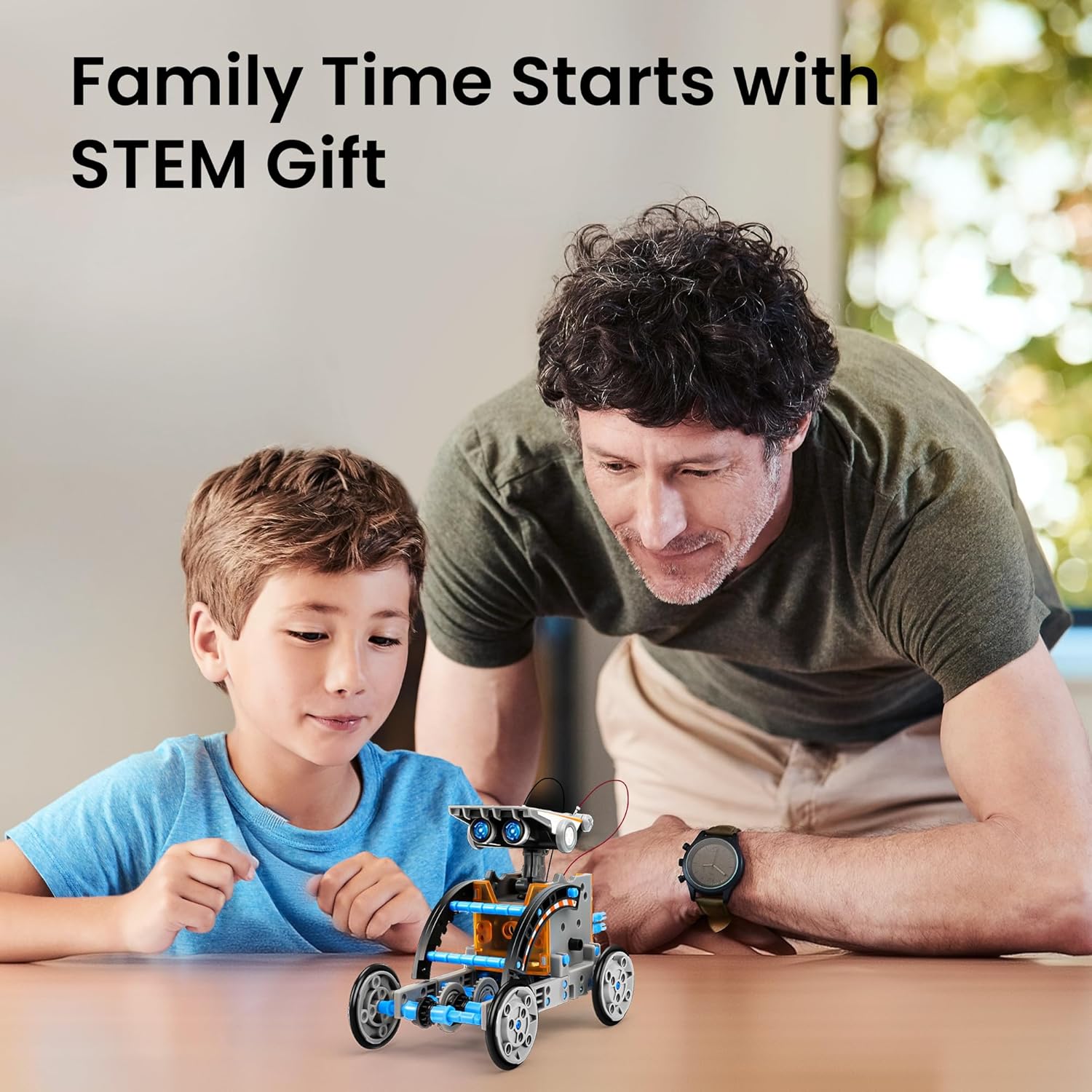
Sillbird
$19.99
In stock on Amazon
Check price on AmazonThames & Kosmos Hydraulic Boxing Bots
The Thames & Kosmos Hydraulic Boxing Bots kit is the most conceptually distinct product here, and it generates the most detailed parent reviews — which tells you something about who’s actually doing most of the building.
The mechanism is hydraulic: small plastic syringes connected by water-filled tubing create pressure that moves the robots’ arms. There are no batteries, no solar panels, no remote control. When you squeeze one syringe, the corresponding arm moves on the opposing robot. Two participants — two children, or a parent and child — can each control one boxer, making this as much a play system as a construction project.
The parent review pattern for this kit is distinct from the other two: adults describe it as “a long shared build we both enjoyed” and specifically call out the hydraulic mechanism as more educationally interesting than standard snap-together assembly. That framing — bonding activity rather than child-independent project — is the most accurate positioning for this kit. Thames & Kosmos product documentation lists the age range as 8+, and the review pattern bears that out: this is a kit where a parent or older sibling functions as co-builder through most of the assembly.
The educational payoff is real. Hydraulic pressure is a concept that shows up in everything from car brakes to construction equipment to medical devices. Experiencing it physically — feeling the resistance in a syringe, watching the arm respond — is a different kind of learning than reading about it. Make.co’s editorial writing on STEM kit design for elementary learners consistently emphasizes that physically felt cause-and-effect experiences drive retention more effectively than diagram-based instruction alone, and the hydraulic mechanism here delivers exactly that quality of experience.
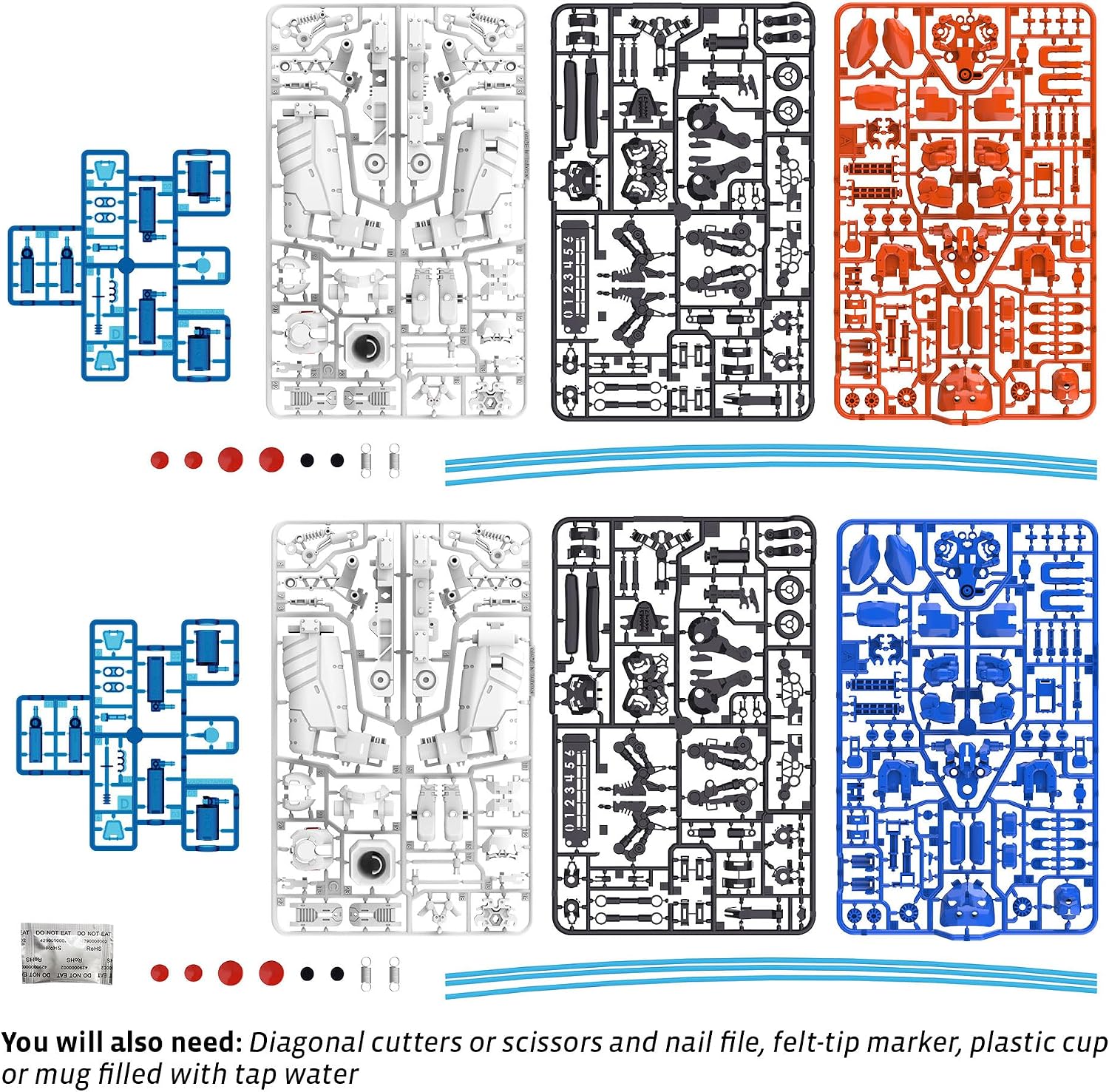
Thames
$38.24
In stock on Amazon
Check price on AmazonThe Replacement Parts Problem Nobody Talks About
Here’s a gap in the review ecosystem worth naming directly: not one of the buyer reviews analyzed for this guide mentions what happens when a small piece breaks or goes missing. For kits targeting the six-to-nine age range, this is not a theoretical concern. Small gears get dropped and roll under refrigerators. Hydraulic tubing gets kinked or chewed. Snap connectors fatigue after repeated rebuilds.
None of these three manufacturers — Sillbird, Opmind, or Thames & Kosmos — maintain a consumer-facing replacement parts storefront in the way that major construction-toy brands typically do. If a critical component fails — particularly the solar panel in the Sillbird or the hydraulic syringes in the Thames & Kosmos Hydraulic Boxing Bots — you’re largely on your own. Some buyers report success contacting manufacturer support directly for missing pieces, but the process is inconsistent and can be slow.
Practical mitigation: Before first build, photograph the complete parts inventory against the included checklist. If a piece is missing from the box, most retailers will process an exchange within the standard return window — typically 30 days — before you’ve discovered the gap mid-build three months later. For the Thames & Kosmos kit specifically, the hydraulic syringes are standard plastic medical-style units in the 10–20ml range; generic replacements are available through home medical suppliers if the originals crack or are lost.
Decision Rules: If X, Then Y
If your child is six to seven years old and you want them building mostly independently: the Opmind 5-in-1 RC Block Kit is the clear choice. Lower friction, faster payoff, age-appropriate challenge.
If your child is six to nine years old and you’re planning to build together: the Thames & Kosmos Hydraulic Boxing Bots delivers the richest shared experience and the most memorable mechanical lesson. Set aside a full afternoon, maybe two.
If your child is nine or older, patient, and you want a kit that lasts months: the Sillbird 12-in-1 Solar is the value play. Twelve configurations, a genuinely novel power source, and enough complexity to hold a motivated older child’s attention across repeated return visits.
If you’re unsure: ask yourself whether the goal is the child builds this or we build this together. That one question resolves most of the ambiguity in this category.
Frequently Asked Questions
What age can a child realistically build the Sillbird 12-in-1 without adult help? Based on the pattern across aggregated buyer reviews of the Sillbird product, nine to ten is the realistic floor for independent assembly. The official label says eight, and an advanced eight-year-old with prior kit experience might manage simpler configurations — but reviewers consistently note that younger children in the 8–13 range need guidance on the gear and connector steps. Don’t buy this expecting a seven-year-old to build it solo.
Does the Thames & Kosmos Hydraulic Boxing Bots kit require water, and is it messy to use indoors? Yes, the hydraulic system uses water in the tubing — that’s what creates the pressure that moves the arms. The system is closed during normal play (water stays in the tubing), but filling the syringes during setup involves open water. Reviewers don’t flag significant mess during play, but filling and refilling at a sink is part of setup. On a hard floor or table indoors: low mess risk. On carpet: use a tray.
How long does it take to assemble each kit — is it a one-afternoon project or multi-day? The Opmind RC kit is closest to a one-afternoon build for its simpler configurations. The Sillbird varies significantly by model — some are shorter builds, others are more involved, and rebuilding between configurations takes time. The Thames & Kosmos Hydraulic Boxing Bots is reliably a multi-session project: the most detailed parent reviews describe it as a long shared build requiring well over two hours. Don’t start it at 7 p.m. on a school night.
Do these kits work indoors on cloudy days, or does the Sillbird need direct sunlight? The Sillbird’s solar motor requires strong light. Reviewers in northern latitudes and apartment settings report that indirect window light or overcast conditions often aren’t enough to run the motor reliably. Direct sunlight — ideally outdoors or through a sun-facing window on a clear day — gives the most consistent results. The Opmind (battery/RC) and Thames & Kosmos Hydraulic Boxing Bots (hydraulic) both work entirely indoors regardless of weather.
What happens if small pieces are missing from the box — can you get replacements? None of the three manufacturers — Sillbird, Opmind, or Thames & Kosmos — offer a standard consumer parts store. If pieces are missing at unboxing, contact the retailer immediately while you’re within the return window. A photo of your parts inventory against the checklist is your best documentation. For the Thames & Kosmos hydraulic syringes specifically, standard plastic syringes are widely available through home medical suppliers as functional replacements if the originals are lost or cracked later.
Are these compatible with Lego pieces for kids who want to extend the builds? None of the three kits use Lego-compatible stud dimensions. The Opmind uses its own block system; the Sillbird and Thames & Kosmos Hydraulic Boxing Bots both use proprietary connector and structural components. You can certainly combine them on a play surface with Lego for imaginative play, but the connection points won’t physically mate with standard Lego bricks. If Lego compatibility is a priority, that’s a separate product category — these are standalone systems.