If you’re shopping for a robotics kit for an 8-to-12-year-old, you’ve probably already noticed that the category splits in two very different directions. On one side, you have RC block builders — kits where the child assembles a physical robot from snap-together or bolt-together parts, then drives or controls it with a remote. Think rolling machines, claw grabbers, solar-powered walkers. On the other side, you have programmable bots — robots that execute instructions the child writes or draws, teaching actual logic and sequencing. Both categories claim the “STEM” label, but they develop genuinely different skills, fail in different ways, and keep kids engaged for different reasons. This article cuts through the marketing to tell you what parents are actually reporting: what held a child’s attention past day one, where adults ended up doing most of the work, and which format fits which kind of learner.
If you already know these product categories and want the decision framework, skip to the comparison section. If you’re choosing between one of these for a specific child, read through — the tradeoffs are real, and the wrong pick is a frustrating $40–$80 mistake.
| EDITOR'S PICK[Apitor Robot X Robot Building K…](https://www.amazon.com/dp/B0945W59HP?tag=greenflower20-20) | Mid-tier[Opmind 5 in 1 STEM RC Robot Bui…](https://www.amazon.com/dp/B0DH58N44K?tag=greenflower20-20) | Budget pick[Sillbird 12-in-1 Solar Robot Bu…](https://www.amazon.com/dp/B0F837N7G1?tag=greenflower20-20) | |
|---|---|---|---|
| Programmable | ✓ | ✗ | ✗ |
| Remote control | ✓ | ✓ | ✗ |
| Power source | — | — | Solar |
| Piece count | 600 | 408 | 190 |
| Models | 12-in-1 | 5 in 1 | 12-in-1 |
| App support | ✓ | ✓ | — |
| Price | $99.99 | $59.97 | $19.99 |
| See on Amazon → | See on Amazon → | See on Amazon → |
RC Block Builders: What the Build-and-Drive Format Actually Delivers
The RC builder category has a deceptively simple pitch: your child assembles the robot from physical pieces, then controls it. The engagement loop is tactile-first — the satisfaction of the build pays off immediately when the thing moves. There are three distinct RC and mechanical-builder kits worth examining side by side, each of which targets a different type of learner and household situation.
Sillbird 5-in-1 RC Robot Kit
Sillbird
$19.99
In stock on Amazon
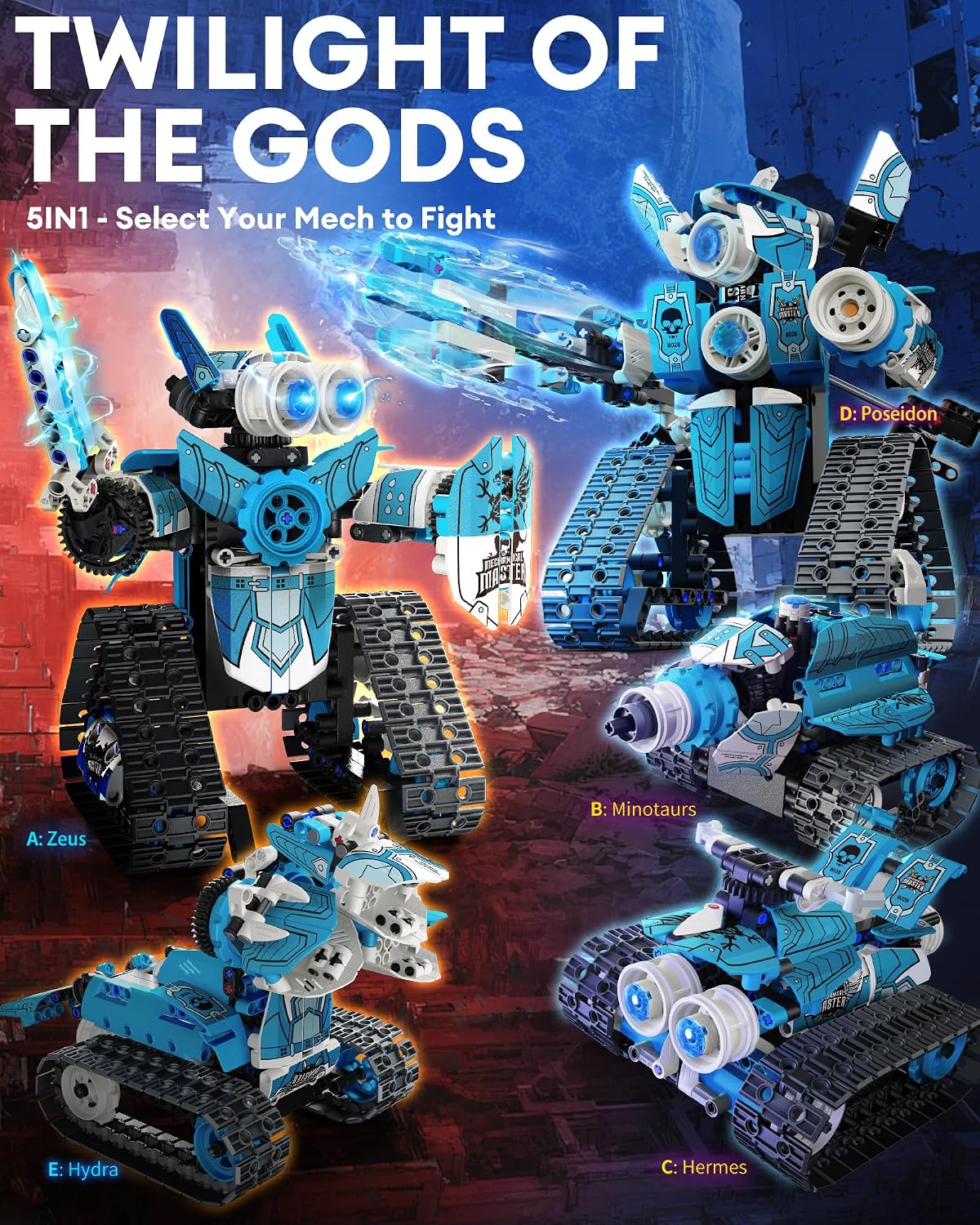
Check price on AmazonThe Sillbird 5-in-1 RC Robot Kit is the standout in this segment based on aggregated parent reviews. Multiple reviewers invoke the WALL-E comparison unprompted — not as a marketing talking point but as a genuine emotional trigger for the purchase. One grandmother reviewing the kit reports her 8-year-old grandson spent hours on the first build completely unprompted, which is the data point parents are actually looking for: not “did it work?” but “did he keep going without me sitting next to him?”
The five rebuild configurations keep the kit from becoming a single-use toy. Once the first form is mastered, kids are motivated to tear it down and try the next. Across aggregated reviews, the pattern is consistent: initial build takes one to two hours with light adult help for the youngest end of the 8–12 range, and subsequent rebuilds go faster as the child internalizes the connector system. For families who want a physical builder with genuine replay value and a low frustration ceiling, this is the most consistently recommended entry point in the RC segment.
Best for: Tactile builders who want immediate physical payoff and replay across multiple configurations.
Sillbird
$19.99
In stock on Amazon
Check price on AmazonSillbird 12-in-1 Solar Robot Kit
Opmind
$59.97
In stock on Amazon
Check price on AmazonThe Sillbird 12-in-1 Solar Robot Kit serves a different purpose and is frequently misunderstood at purchase. The solar panel is the entire power story — there are no batteries — and reviewers consistently flag a gotcha that the product description doesn’t make obvious: the solar panel requires direct outdoor sunlight to function. One reviewer awards four stars specifically because the kit failed to operate at a kitchen table under indoor lighting, which caught them off guard.
Make.co’s maker community roundup on solar robot kits, published in their 2024 coverage of entry-level builder kits (Make.co, “Solar Robot Kits Reviewed,” 2024), reinforces this point: even strong indoor artificial light tops out far below the irradiance level needed to drive small panels under load. This is not a flaw, exactly — it’s a physics lesson baked into the product. But it’s a purchasing implication you need to sit with. If your child has reliable outdoor access and sunny weather, the solar kit becomes a genuinely memorable experiment in renewable energy. If you’re in a cloudy climate or an apartment setting without easy outdoor space, expect disappointment.
Best for: Kids with reliable outdoor access who can tolerate the “it’s a feature, not a bug” explanation for solar-dependent operation.
Opmind
$59.97
In stock on Amazon
Check price on AmazonThames & Kosmos Hydraulic Boxing Bots
Apitor
$99.99
In stock on Amazon
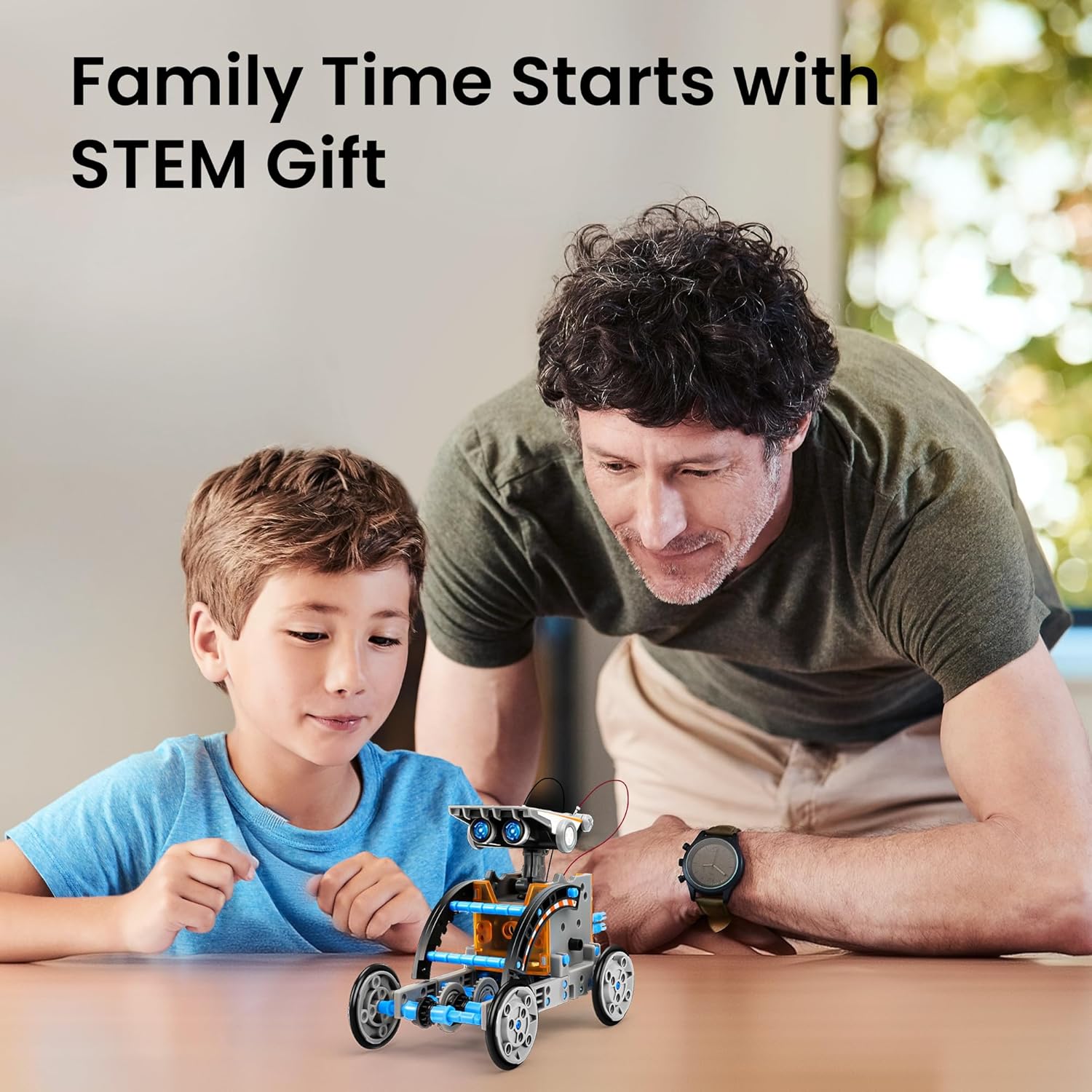
Check price on AmazonThames & Kosmos Hydraulic Boxing Bots is the category outlier worth discussing separately. It’s not RC-controlled and it’s not programmable — it’s hydraulic, meaning the robot’s movements are driven by water-filled syringes the child squeezes with their hands. This is the closest thing in the $30–$70 range to real mechanical engineering: you’re learning how fluid pressure transmits force, the same principle behind heavy construction equipment and industrial machinery.
Parent reviews for this kit generate the most intergenerational enthusiasm of anything in this segment. One parent bought it for a 6-year-old (below the nominal 8+ range) and reports both of them ended up engaged for hours, explicitly calling out the educational value as exceeding that of comparable building sets. The build complexity is real — more on that in the FAQ — but the payoff is a two-player experience with genuine replay value.
Wired’s 2025 edition of “The Best STEM Toys for Kids” (Wired, wired.com, 2025) highlights hydraulic mechanism kits in this class as a genuine engineering-education standout, while flagging assembly complexity as the primary age-gating factor for younger children.
Best for: Families who will play together; kids 10 and up who can manage syringe assembly with moderate adult help.
Apitor
$99.99
In stock on Amazon
Check price on AmazonProgrammable Bots: Where Logic Meets Frustration Tolerance
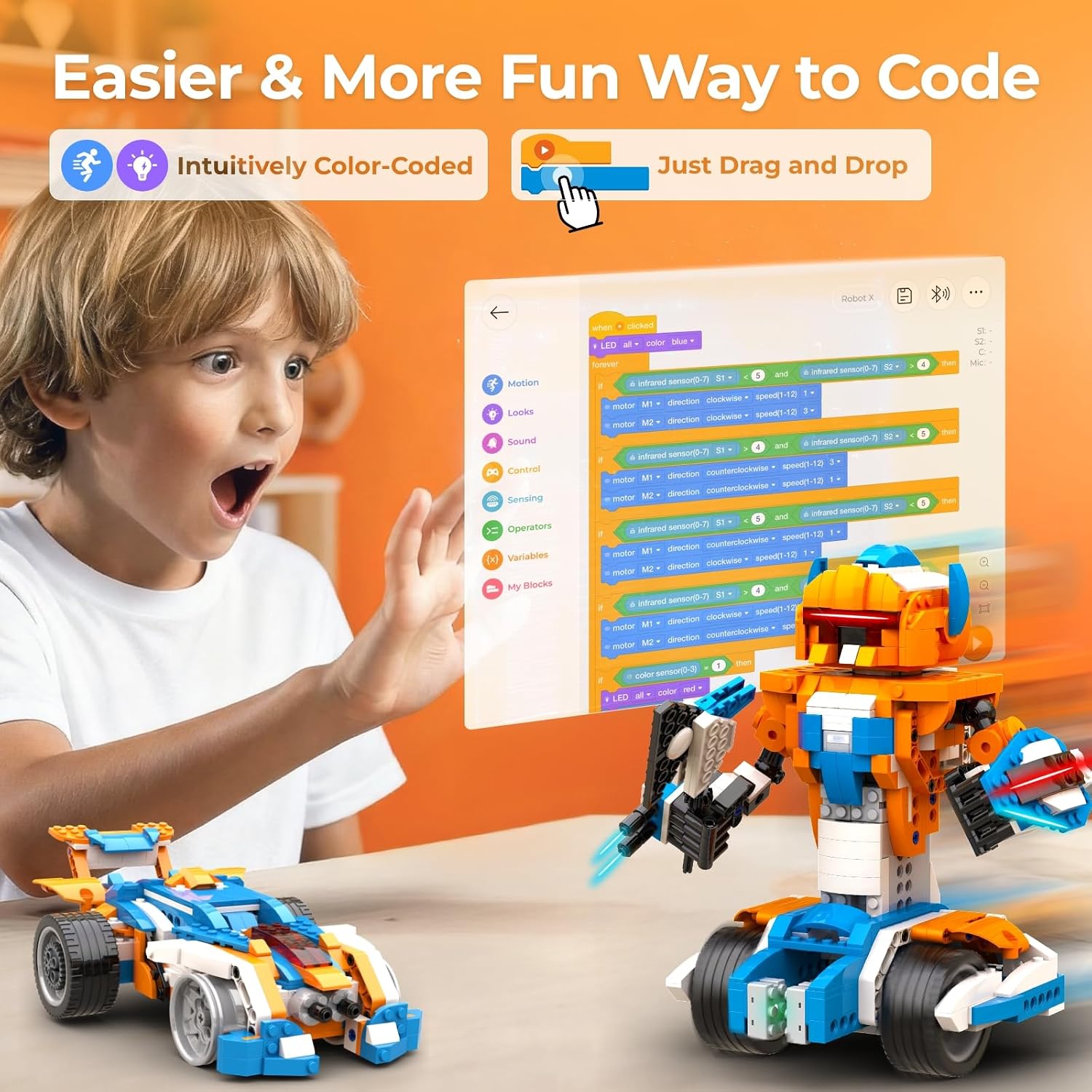
Programmable robots ask something different of the child: they need to think in instructions. Instead of building something and driving it, you’re telling the robot what to do — and if it doesn’t do what you expected, you have to debug why. This is closer to actual software thinking, and it self-selects for a different kind of kid.
Ozobot Bit Starter Pack
Sillbird
$19.99
In stock on Amazon
Check price on AmazonOzobot Bit is the entry-level programmable bot most parents encounter first, often because their child encountered it at school. The Ozobot reads color codes — sequences of colored lines drawn on paper or a tablet — and executes corresponding behaviors (spin, speed up, pause, change direction). It’s a genuinely clever physical-meets-digital approach to teaching sequencing logic.
Here’s the honest tradeoff: Ozobot reviewers describe the color-code reading as “touchy.” The colors need to be precise — the right marker, applied cleanly, with adequate contrast. Parents who assumed their child could use loose crayon scribbles were frustrated. The gap between “school Ozobot experience” (where teachers typically use proper Ozobot markers on printed sheets) and “home Ozobot experience” (where kids reach for whatever markers are nearby) is real and leads to a consistent pattern of review complaints across aggregated sources.
If your child used an Ozobot in class and loved it, the home version can absolutely replicate that experience — but you need the right consumables. The OzoCodes tablet app, which uses the screen as the color-code surface, sidesteps the marker-precision problem almost entirely and is worth knowing about before purchase.
Best for: Logical-sequential thinkers with patience for precision; kids who have already engaged with Ozobot in a classroom setting.
Sillbird
$19.99
In stock on Amazon
Check price on AmazonSide-by-Side Engagement Snapshot
Based on aggregated parent reviews, here is how the four kits compare on the dimensions that actually predict whether a kit survives the first week:
| Kit | First-session length | Adult help (age 8) | Replay value | Tier |
|---|---|---|---|---|
| Sillbird 5-in-1 RC | 2–3 hrs | Light (30 min) | High — 5 configurations | Sillbird — $19.99 |
| Sillbird 12-in-1 Solar | 1.5–2 hrs | Moderate | Moderate — weather-dependent | Opmind — $59.97 |
| Hydraulic Boxing Bots | 1.5–2 hrs | Moderate–High | High — ongoing 2-player use | Apitor — $99.99 |
| Ozobot Bit | 45–90 min | Low–Moderate | Moderate — creativity-dependent | Sillbird — $19.99 |
The engagement gap between the RC builders and the Ozobot isn’t a quality difference — it reflects a format difference. RC builds produce a physical artifact that moves on command; Ozobot produces a behavior sequence that requires iteration to improve. Kids who like building will log more hours faster. Kids who like puzzles will find the Ozobot more rewarding over time.
How to Actually Choose: The Decision Framework
If your child is a builder who wants immediate physical payoff → go RC block builder. The Sillbird 5-in-1 RC kit consistently wins on unprompted engagement. Kids who like mechanical assembly will stay in the zone for hours without adult prodding.
If you want a science lesson with reliable outdoor access → the Sillbird 12-in-1 Solar Kit is genuinely educational about energy systems, but treat it as an outdoor-only experiment. Don’t give it to a child who will primarily use it indoors or in a climate that limits sun exposure. Make.co’s 2024 solar kit coverage (Make.co, “Solar Robot Kits Reviewed,” 2024) is explicit on this point: the irradiance requirements of small photovoltaic panels in this class rule out indoor use as a practical operating mode.
If you want multigenerational play and engineering depth → Thames & Kosmos Hydraulic Boxing Bots is the pick for families who will actually sit down together. The hydraulic mechanism teaches real physics. The two-player format means it doesn’t get abandoned when the build phase ends. Budget extra adult involvement during initial assembly for kids under 10. Wired’s 2025 STEM toy coverage (Wired, “The Best STEM Toys for Kids,” 2025, wired.com) names hydraulic mechanism kits in this class as an engineering-education standout precisely because the mechanism is not a simulation — it’s a working fluid-pressure system in the child’s hands.
If your child has a logical-sequential mind and patience for precision → Ozobot is the right bridge to actual programming concepts. It pairs especially well with a tablet to avoid marker-precision frustration. If they’ve already used one at school, the home version will feel familiar — just use the OzoCodes app or purchase Ozobot-compatible markers specifically.
If your child has a short frustration window → avoid Ozobot and the Solar Kit as first purchases. Both require patience with environmental variables (marker precision, sunlight) that can short-circuit a session before it starts. The RC builder or Hydraulic Bots will provide faster positive feedback loops.
Frequently Asked Questions
What is the right age for a solar-powered robot kit versus a battery-powered one?
Solar kits work best for kids 9 and up who can handle abstract explanations of why the robot slows down in shadow. The physics lesson is real and valuable, but it requires a child who can tolerate “the robot isn’t broken, it just needs more light” without a meltdown. Battery-powered and RC kits are friendlier to the full 8–12 range because power delivery is consistent and immediate.
How much adult help do these kits realistically require for an 8-year-old?
Based on aggregated parent reviews, expect 20–45 minutes of active adult involvement for the initial build across most kits in this segment. After that, most 8-year-olds can continue independently. The Hydraulic Boxing Bots is the exception — the syringe assembly requires more dexterity and adult oversight, especially for kids at the younger end of the range. The Sillbird 5-in-1 RC is the most genuinely independent build for an 8-year-old.
Does the Ozobot work well at home if a child has used it at school?
Yes, with one important caveat: the school experience usually involves dedicated Ozobot markers and printed code sheets. At home, kids reach for regular markers, which may not produce the color saturation the sensor needs. Either purchase Ozobot-compatible markers specifically, or use the OzoCodes tablet app as your primary surface. The robot itself translates perfectly from classroom to home — the frustration risk is in the consumables, not the device.
Is the Hydraulic Boxing Bot too hard for kids under 10 to build without help?
For kids 8–9, expect moderate adult help during assembly — specifically with the syringe connections and tube routing. The finished robot is accessible and fun for that age range, but the build phase runs about 90 minutes with an adult present. For 10–12-year-olds, reviewers report much more independence during the build.
How many hours of engagement do multi-build kits actually provide?
The Sillbird 5-in-1 RC kit generates consistent reports of 6–10 hours across the first few sessions as kids work through each configuration. The 12-in-1 Solar Kit theoretically has more build variety, but outdoor-weather dependency reduces effective session count significantly. For the Hydraulic Boxing Bots, the ongoing two-player format means total engagement is often measured in weeks rather than hours — it becomes a recurring activity rather than a build-and-done project.
Can the Sillbird solar robot run indoors under artificial light?
No, not reliably. Multiple reviewers report the robot either stops entirely or moves too slowly to be satisfying under standard indoor lighting, including bright LED overhead fixtures. Make.co’s 2024 solar kit roundup (Make.co, “Solar Robot Kits Reviewed,” 2024) confirms that small solar panels in this class are calibrated for outdoor irradiance levels that indoor lighting cannot match. Treat this as an outdoor kit and the solar limitation becomes a feature, not a bug.
The decision between RC builders and programmable bots isn’t really about which category is “better” — it’s about matching the format to your child’s cognitive style and your household’s realistic usage environment. RC builders reward spatial thinkers who want tactile feedback fast. Programmable bots reward kids who are genuinely curious about cause and effect and patient enough to iterate. The Hydraulic Boxing Bots occupy their own category of mechanical wonder that’s hard to overstate when it clicks for a family. Start with the frustration-tolerance question and the sunlight question, and the right pick usually becomes obvious.