If you’ve been eyeing a self-emptying robot vacuum — one that not only roams your floors on a schedule but also sucks its own dustbin clean into a base station dock — you’re looking at a category that’s matured fast in the last two years. The self-emptying part matters because it’s the thing that turns a robot vacuum from a gadget you have to babysit every few days into something that genuinely runs itself for weeks at a time. The dock houses a larger bag or bin and pulls the debris out of the robot automatically after each cleaning run. That automation adds mechanical complexity, and in the under-$400 price band, the tradeoffs between cleaning performance, app reliability, pet-hair management, and long-term dock durability are real and worth understanding before you commit.
This article synthesizes owner review patterns across four models — the Roborock Q7 M5+, the Shark Matrix with self-empty base, the iRobot Roomba i1+ (sometimes listed as the i1+ bundle with AutoEmpty dock), and the Tikom L8000 Plus — to give you the honest comparison framework you need. We’ll show you where each one earns its price, where owners keep running into friction, and close with a direct decision rule.
| EDITOR'S PICKTikom Robot Vacuum and Mop | Mid-tierShark Matrix Clean | Robot Vacu… | Budget pickroborock Q7 L5 Robot Vacuum and… | |
|---|---|---|---|
| Suction (Pa) | 6000Pa | — | 8,000Pa |
| Self-Empty Base | ✓ | ✓ | ✗ |
| Capacity | 90 Days | 60-Day | — |
| Mop Function | ✓ | ✗ | ✓ |
| Price | $279.99 | $269.99 | $139.99 |
| See on Amazon → | See on Amazon → | See on Amazon → |
What the Numbers Actually Say Before You Dig In
A quick orientation on specifications before we get into per-model verdicts:
| Model | Suction (manufacturer-rated) | Self-Empty Bag Capacity | Review Volume (as of mid-2026) |
|---|---|---|---|
| Roborock Q7 M5+ | ~2,700 Pa (Q7 platform) | 2.5L bag, ~7 weeks | High (thousands of verified reviews) |
| Shark Matrix + dock | ~750–1,000 Pa (motor class) | HEPA bag, ~45 days | High |
| iRobot i1+ bundle | ~600–700 Pa | Clean Base, ~60 days | High |
| Tikom L8000 Plus | ~10,000 Pa (peak) | 2.5L bag | Low-moderate (early adopter phase) |
Pa = Pascals, the unit manufacturers use to measure suction force. Higher numbers don’t always mean better real-world pickup — nozzle design and brush engineering matter too — but the gap between the Tikom’s spec-sheet peak and the iRobot’s lower-rated motor is large enough to be meaningful on thick carpet.
Per-Model Verdicts: What Owners Are Actually Saying
Roborock Q7 M5+: The Daily-Driver Standard for Pet Owners
The Roborock Q7 M5+ has the most depth of owner experience to draw from in this price tier. Across aggregated reviews, the dominant signal is strong daily performance in homes with heavy pet shedding — particularly large dogs. Wirecutter’s ongoing robot vacuum review series, published by The New York Times, and independent owner review clusters both reflect a consistent pattern: buyers who have owned two or three robot vacuums and land on the Q7 M5+ tend to call it categorically better than what came before, not just marginally better.
The specific win owners describe most: consistent mapping that doesn’t degrade over weeks of use, reliable return-to-dock behavior even in multi-room homes, and a self-empty mechanism that genuinely goes weeks between bag changes with a single large dog contributing daily.
The friction point that comes up repeatedly and consistently enough to take seriously: Alexa voice integration is unreliable. Multiple owner reports across different household configurations describe the Alexa skill as intermittently unresponsive or requiring reauthorization after app updates. If your home automation stack is Alexa-first and voice control matters to you daily, this is not a minor nuisance — it’s a recurring workflow interruption. Google Assistant integration draws fewer complaints. The Roborock Home app itself gets more consistent praise than the Alexa layer.
If X, then Q7 M5+: You have one large shedding dog, mixed hard floor and low-to-medium pile carpet, and your smart home runs on Google or you’re app-centric rather than voice-centric.
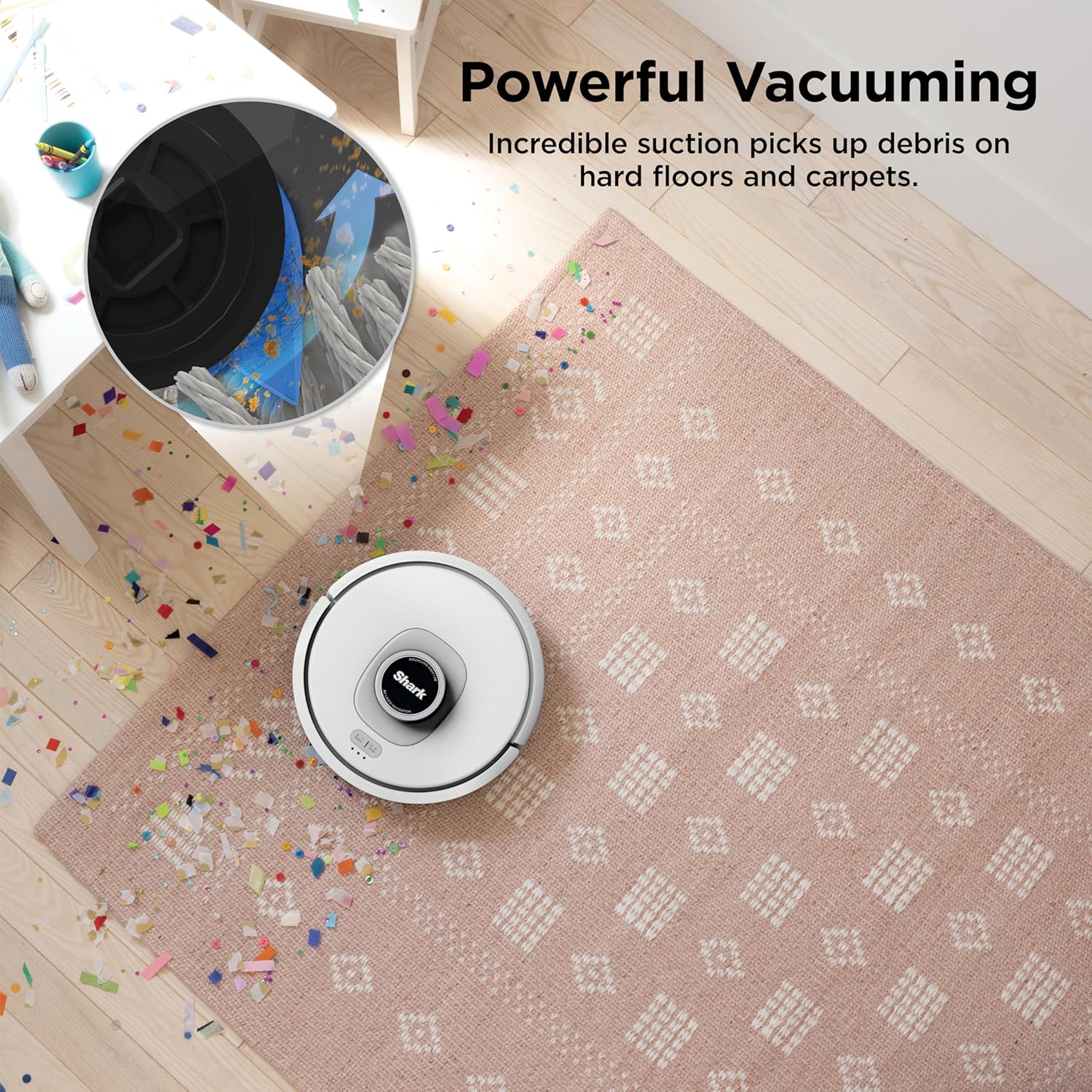
Shark
$269.99
In stock on Amazon
Check price on AmazonShark Matrix with Self-Empty Base: The Carpet Specialist
The Shark Matrix earns its strongest owner endorsements from carpet-heavy homes — not the occasional area rug, but homes where 80–90% of the floor area is carpet. Wired’s buyer’s guide coverage, “The Best Robot Vacuums We’ve Tested” (2025 edition), and aggregated retailer review pools both surface the same pattern: buyers who describe their home as “almost entirely carpet” express the highest satisfaction-per-dollar sentiment of any model in this tier.
What Shark’s engineering does well here is brush-roll design optimized for carpet agitation, combined with a navigation system (IQ Navigation with matrix-clean mapping) that ensures consistent row-by-row coverage rather than random bouncing. On carpet, that coverage pattern matters more than on bare floors where debris migrates freely.
The tradeoff: on hard floors with pet hair, particularly fine cat hair or bird dander, owner satisfaction drops relative to Roborock. The Shark Matrix isn’t a poor hard-floor performer, but the gap is noticeable if your home skews hard surface.
Suction numbers on the Shark’s motor class are lower than the Tikom’s peak spec, but on carpet, motor-class comparisons are less predictive than brush design — and owners consistently validate that the Matrix punches above its suction number on pile surfaces. Robotics and Automation News, in their 2024 article “Self-Emptying Robot Vacuums: Market and Reliability Overview,” noted that dock mechanisms on Shark’s Matrix-tier products drew fewer first-18-month failure reports than several competitors — a meaningful data point for buyers whose top anxiety is long-term dock reliability.
If X, then Shark Matrix: Your home is majority carpet, you have dogs (not fine-hair pets primarily), and long-term dock reliability in the first two years is a top concern.
Shark
$269.99
In stock on Amazon
Check price on AmazoniRobot Roomba i1+ with AutoEmpty Dock: The Multi-Pet, All-Hard-Floor Choice
The iRobot bundle in this tier draws a specific and behaviorally revealing owner pattern: people who receive one unit, see it perform in a multi-pet, hard-floor household, and then buy additional units for other rooms or floors. That’s not a coupon-driven purchase — that’s genuine satisfaction driving repeat commitment. The household profile that generates this behavior most consistently involves multiple animal types: two dogs, a cat, birds, or similar mixed-species combinations on predominantly hard floors.
Wirecutter’s ongoing robot vacuum review series notes that iRobot’s acoustic and particle sensor integration — which adjusts cleaning passes on the fly — is a real differentiator when you have different debris types (dog hair, birdseed, cat litter) appearing in the same run. TechCrunch’s product analysis coverage of the Roborock Q7 platform, published in 2023, also highlighted sensor-driven cleaning pass adjustment as a distinguishing feature in this price tier, a capability the iRobot bundle has carried for longer. The Clean Base dock, iRobot’s proprietary self-empty system, uses a suction mechanism with a longer track record compared to newer entrants in the category.
The honest limitation: suction numbers are the lowest in this comparison set on paper, and if you have medium-pile or thicker carpet, owners in those environments rate the iRobot lower than carpet-specialist models. This is a hard-floor machine that handles multi-pet complexity well, not an all-terrain cleaner.
App experience and Alexa/Google integration draw generally positive owner reviews relative to the Roborock’s Alexa-specific friction — a real differentiator if your household is voice-automation-dependent.
If X, then iRobot i1+ bundle: You have hard floors throughout, multiple pet types (especially mixed species), and you’re willing to trade raw suction for sensor intelligence and integration reliability.
Shark
$269.99
In stock on Amazon
Check price on AmazonTikom L8000 Plus: The High-Spec Newcomer — Read This Before You Commit
The Tikom L8000 Plus is the outlier in this comparison. Its spec sheet is aggressive — manufacturer-rated 10,000 Pa peak suction is substantially higher than anything else in this price band, and early owners describe out-of-box mapping as genuinely good, with quiet operation even at high suction settings, a combination not common at this price point.
Here’s the honest flag: the review base is thin. Where the other three models have thousands of verified long-term owner reviews to draw statistical patterns from, the Tikom L8000 Plus is in its early adopter phase. What we can say from available early owner accounts is positive — but “positive in the first 60–90 days” is not the same as “reliable over 18 months,” and in the self-emptying category, the dock mechanism is specifically where failure risk concentrates over time. Robotics and Automation News’ 2024 reliability overview of the self-emptying category identified dock motor longevity as the primary long-term failure vector across new entrants — a pattern directly relevant to evaluating a brand with limited long-run data.
If you’re the kind of buyer who reads owner reviews for 12-plus month reliability data before committing, the Tikom doesn’t have that pool yet. If you’re comfortable being an early adopter on a promising spec at this price, the suction numbers and early mapping reports make it worth tracking — but go in with eyes open about what you don’t yet know.
If X, then Tikom L8000 Plus: You want the highest suction spec available under $400, you’re comfortable with early-adopter risk, and your floors are hard or low pile where 10,000 Pa peak suction has the most to offer.
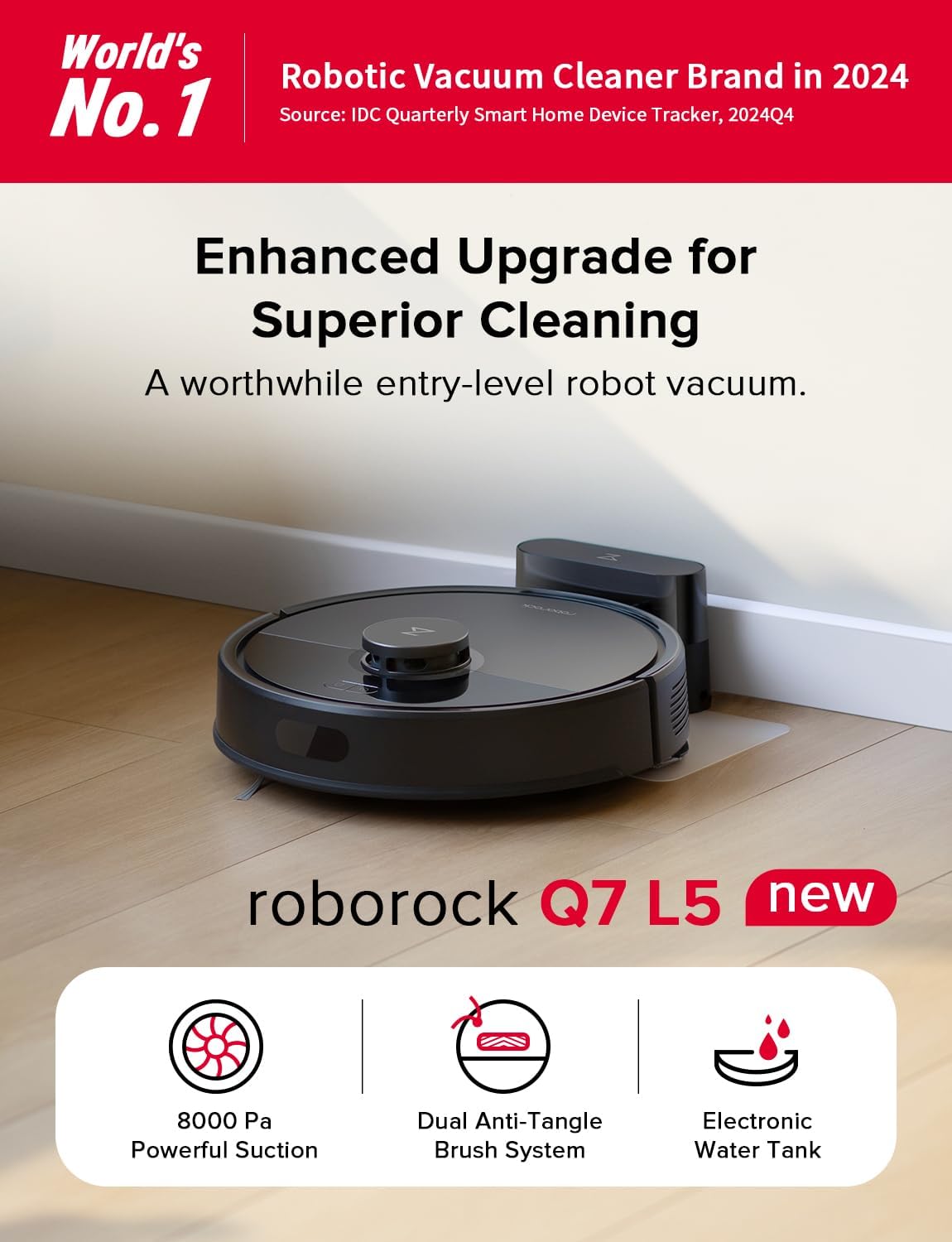
roborock
$139.99
In stock on Amazon
Check price on AmazonFrequently Asked Questions
How often do I actually need to intervene with a self-emptying robot vacuum?
Based on aggregated owner reports across all four models, most users in average households (one to two pets, 1,200–2,000 sq ft) describe intervention cycles of two to four weeks for bag or bin changes, with occasional manual restarts after the robot gets stuck or encounters an unmapped obstacle. “Set and forget” is largely real, but not absolute — expect one minor intervention per week on average in a complex home with many furniture legs, pet toys, or charging cables left on floors.
Are the replacement bags or bins expensive and easy to find?
For Roborock and iRobot, replacement bags are widely available from multiple suppliers and typically run $3–$8 per bag in multi-packs. Shark’s HEPA bags are similarly accessible. Tikom’s consumables are available through the manufacturer and select online retailers, but the supply chain is less diversified — worth stocking a few extra bags at purchase time. Over a year of use, budget roughly $30–$60 in consumables across all four models for an average household.
Do these work well in homes with multiple pet types — not just dogs?
Yes, with nuance. The iRobot bundle draws the most explicit multi-species owner endorsements (dogs plus cats plus birds in the same household). Fine particles like bird dander and cat litter behave differently from dog hair, and iRobot’s sensor-adjusted cleaning passes handle that variability better than fixed-suction competitors according to owner accounts. The Roborock Q7 M5+ performs well with heavy dog hair but draws fewer multi-species-specific reviews.
What happens if the self-empty dock motor fails — is it repairable?
This is the most legitimate long-term anxiety in the category, and it’s worth naming honestly. The dock motor adds a mechanical failure point that a standard robot vacuum doesn’t have. Manufacturer warranty coverage on docks varies: iRobot and Shark both offer one-year warranties on dock components with paid extended options. Third-party repair is possible but not standardized — dock units are not designed for consumer-level disassembly. The practical risk mitigation is buying from a manufacturer with established U.S. customer support and documented replacement part availability. iRobot and Shark have the longest track records here; Tikom’s support infrastructure is newer and less proven.
Is 10,000 Pa suction meaningfully better than 6,000 Pa for everyday home use?
On hard floors with dry debris, the difference above roughly 4,000–5,000 Pa is largely diminishing returns for normal household soil. Where high suction numbers matter most is embedded pet hair in medium-to-thick carpet pile. As Robotics and Automation News noted in their 2024 self-emptying category overview, suction spec comparisons above 5,000 Pa on hard floors produce less measurable real-world difference than brush-roll design does. The Tikom’s 10,000 Pa peak is most meaningful on carpet; on bare floors, the iRobot and Shark hold their own despite lower rated suction.
Can these handle transitions between hardwood and medium-pile carpet without getting stuck?
All four models handle the hardwood-to-low-pile transition reliably based on owner accounts. Medium pile (roughly 10–15mm height) is where variability appears: the Roborock and Shark Matrix handle it consistently; the iRobot is less consistent on the thicker end of medium pile. Thick or high-pile carpet (shag, high-loop rugs above 20mm) is where stuck-robot reports increase across all four — that’s a category limitation, not a single-model issue, at this price tier.
The Decision Rule in Plain English
- Carpet-dominant home, one to two dogs: Shark Matrix is the owner-validated choice.
- Mixed floors, one large shedding dog, Google Home ecosystem: Roborock Q7 M5+ is the daily-driver pick.
- Hard floors throughout, multiple pet types, Alexa-first home: iRobot i1+ bundle earns its price.
- Early adopter, want the highest suction spec available under $400, understand thin review base: Tikom L8000 Plus is worth the calculated risk — stock extra bags and keep your warranty documentation.
The self-emptying mechanism on all four genuinely delivers on its promise for most users. The real differentiator in this tier isn’t whether the dock works — it’s whether the robot’s cleaning intelligence, integration ecosystem, and long-term support infrastructure match your specific floor plan and household. That’s the match worth spending time on before you commit.